+
Pinus bungeana

Pinus bungeana

Bunge's pine, lacebark pine, white-barked pine

Description

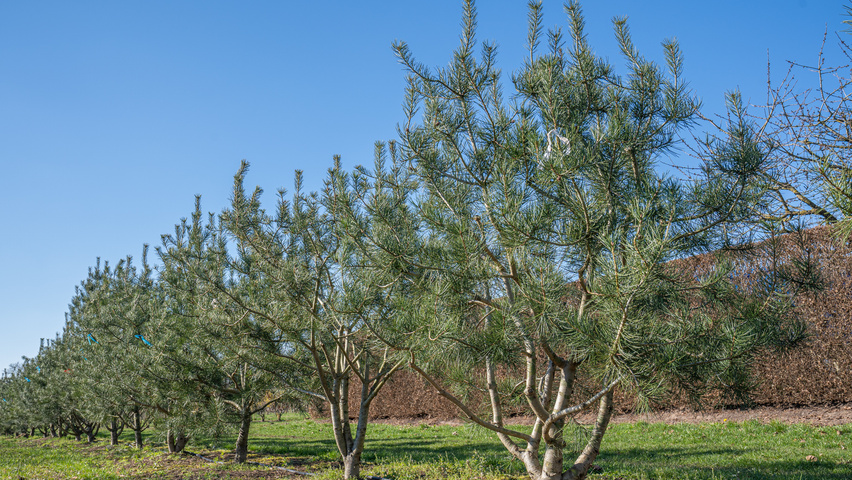
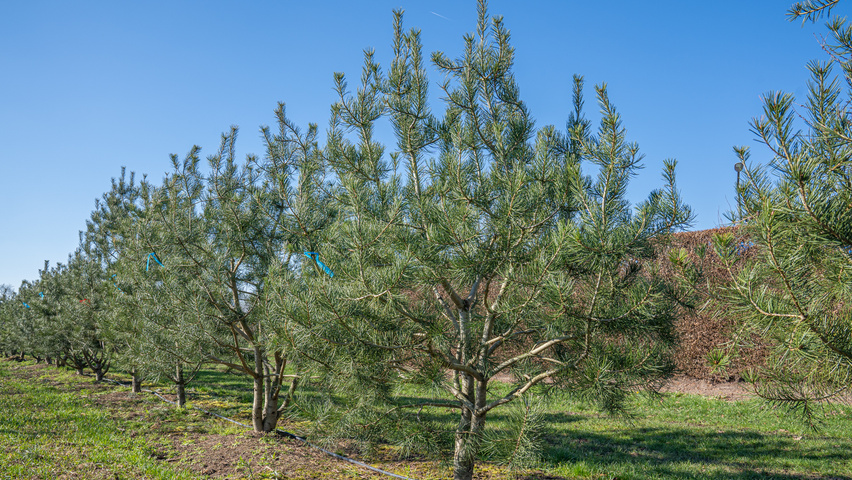
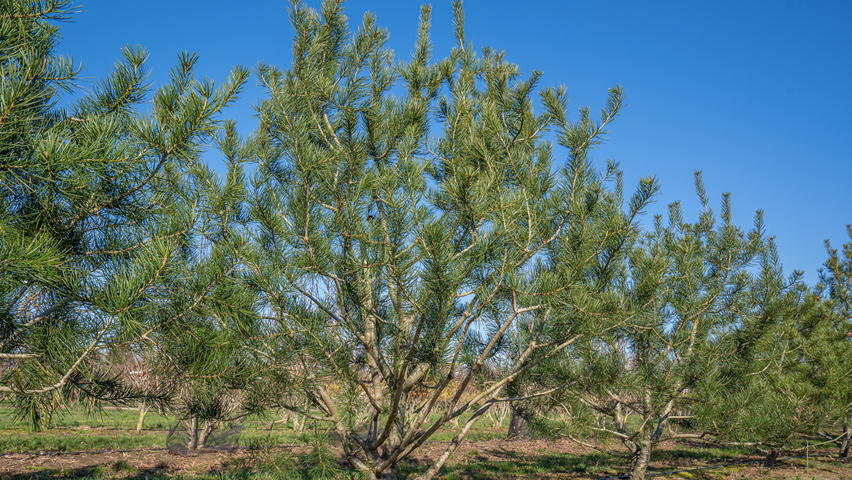
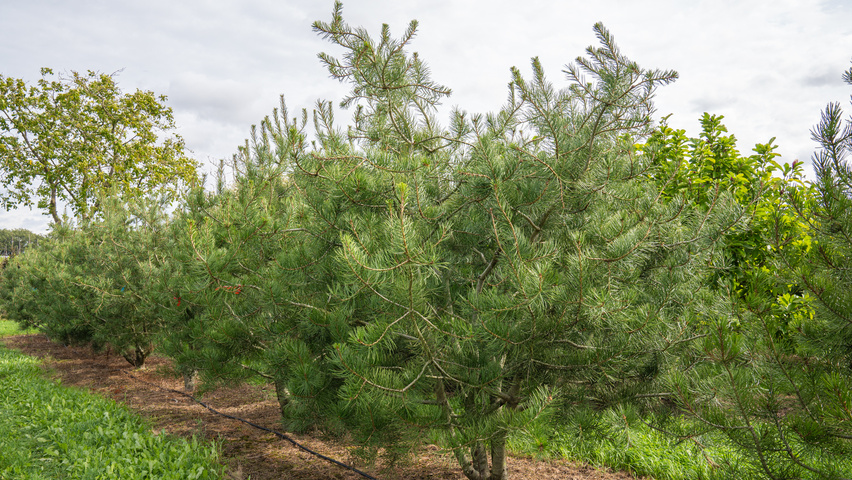
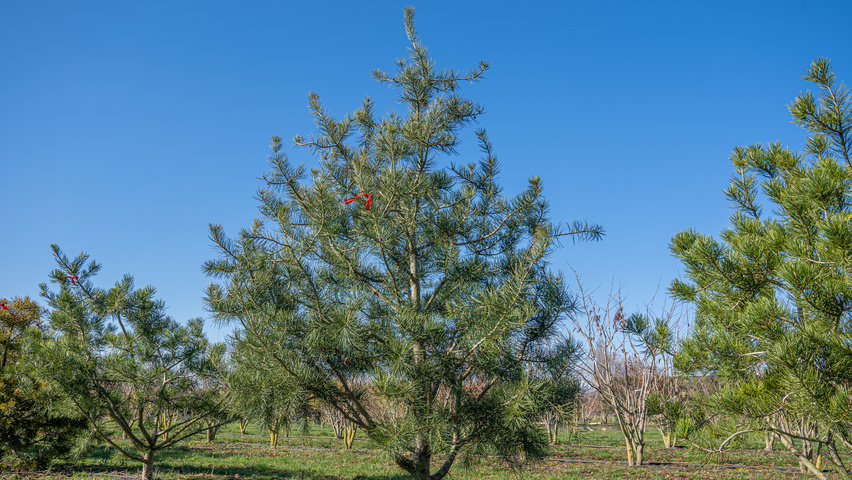
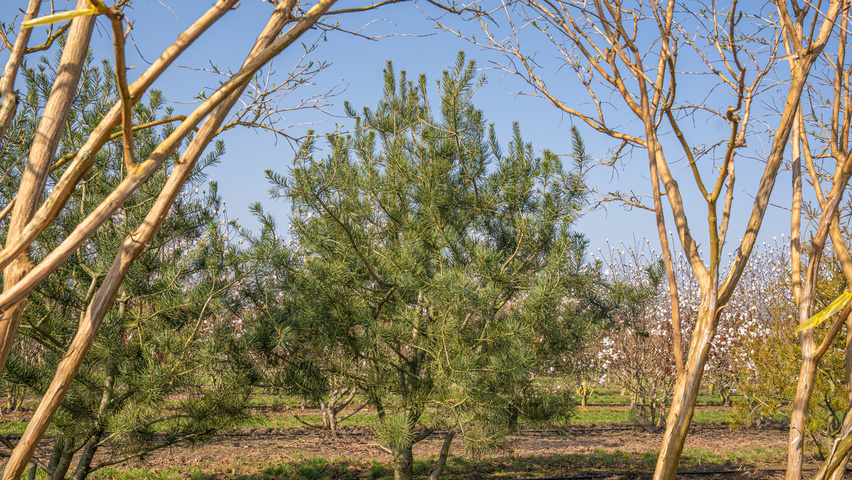
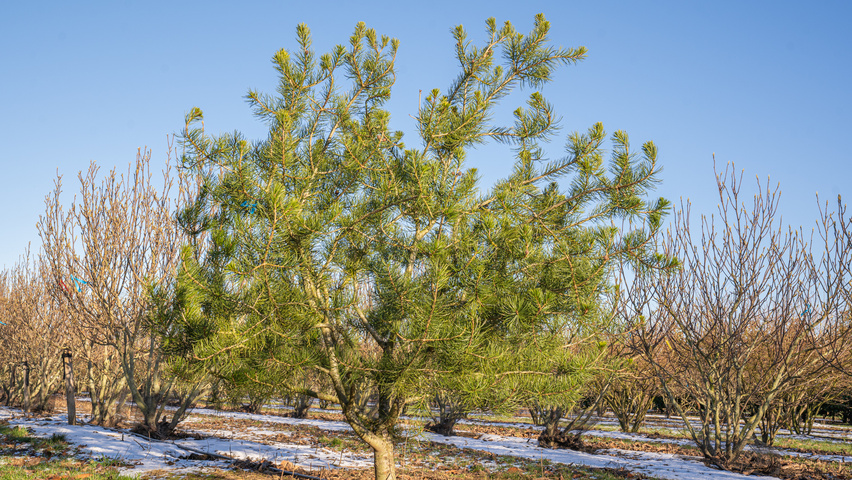
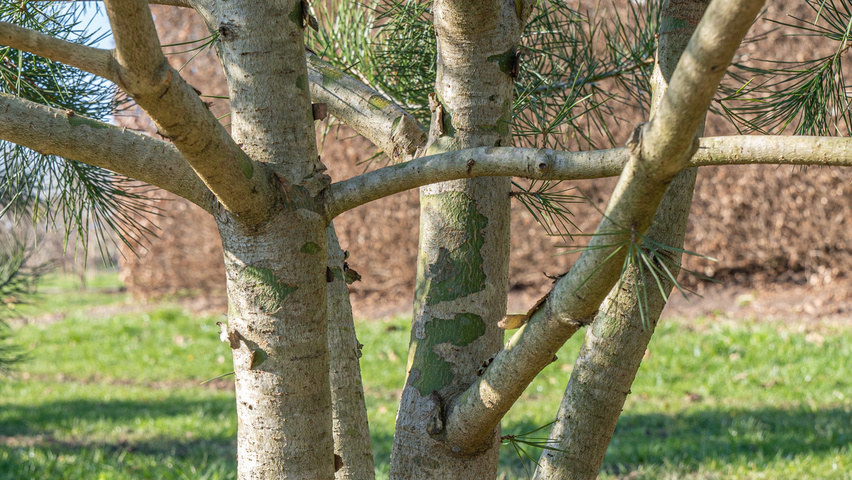
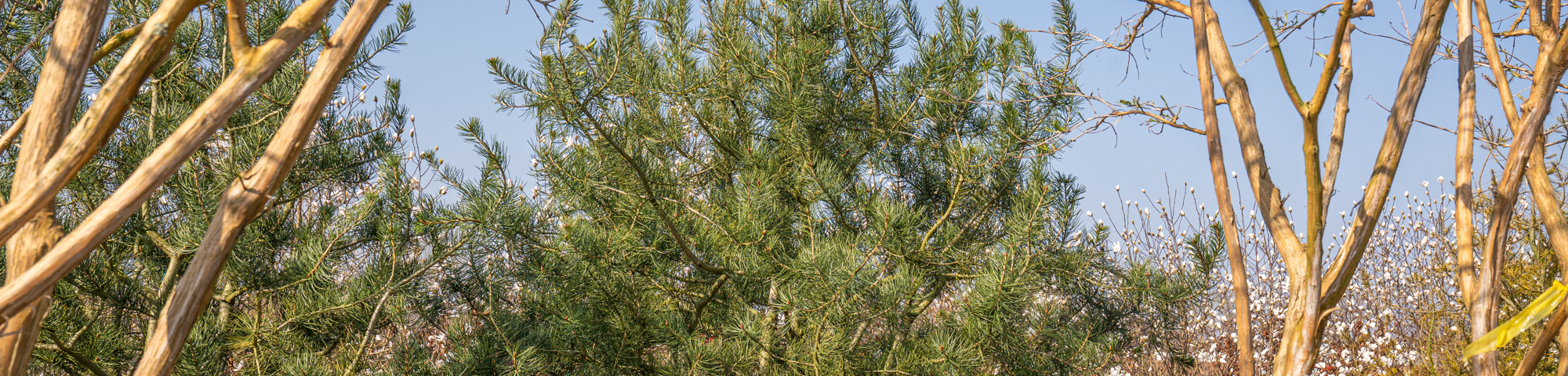
Pinus bungeana (lacebark pine) is a rare pine species native to northeastern and central China. It grows in mixed open forests together with species such as Acer davidii, Betula albosinensis, Quercus variabilis and Rhus chinensis. In China it is also planted near Buddhist temples for its beautiful white bark. The Russian botanist Alexander von Bunge was one of the first to describe the species in 1831, and the tree was named in his honor. Pinus bungeana is a slow growing and irregularly shaped tree, often multi stemmed, reaching about fifteen to thirty meters in height and ten to fifteen meters in width, with an ovate to later rounded and semi open crown and a somewhat flattened top.

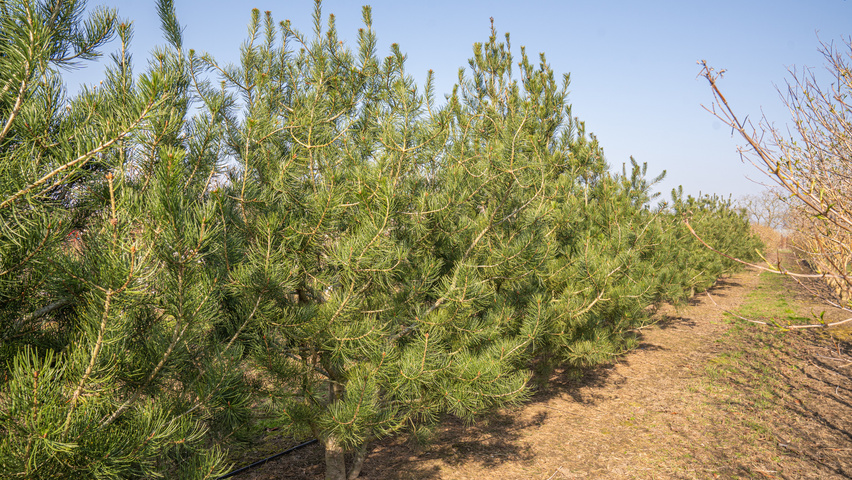
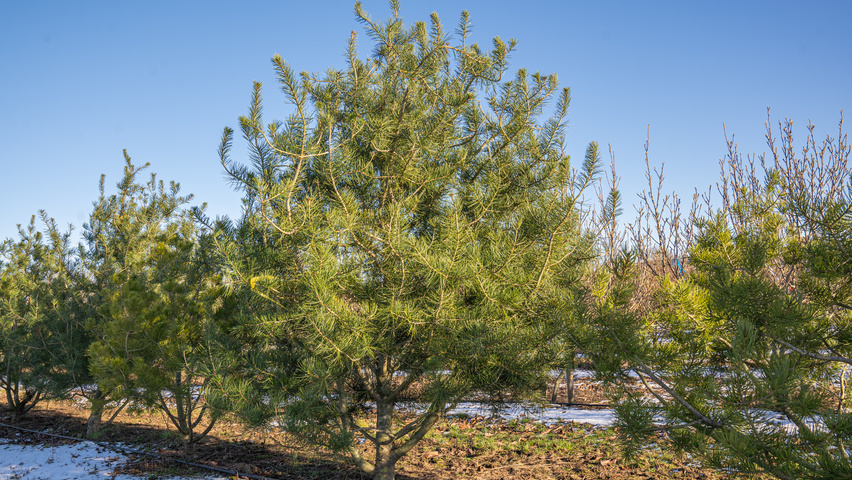
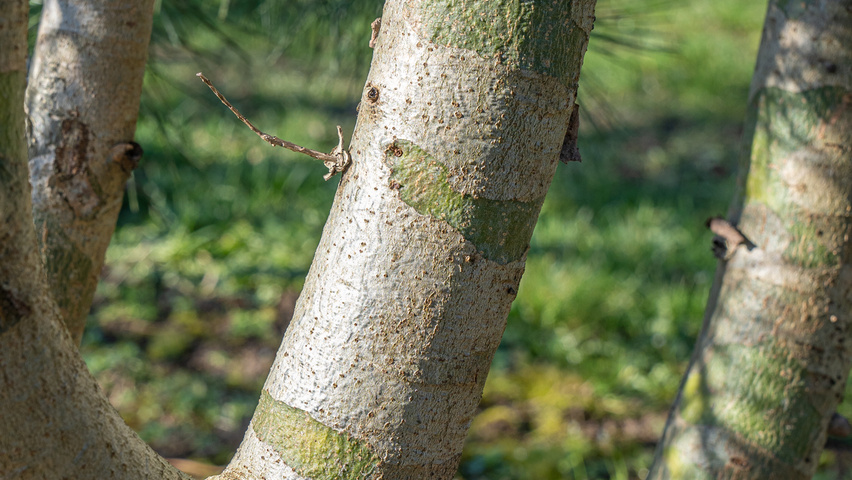
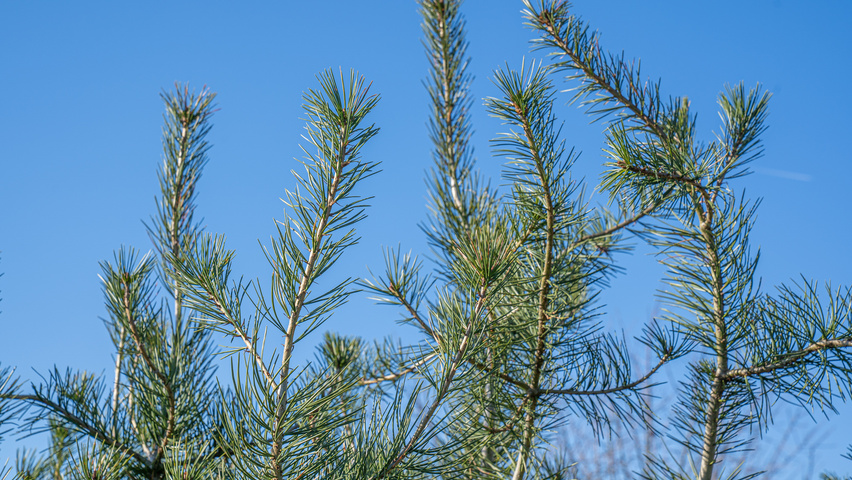
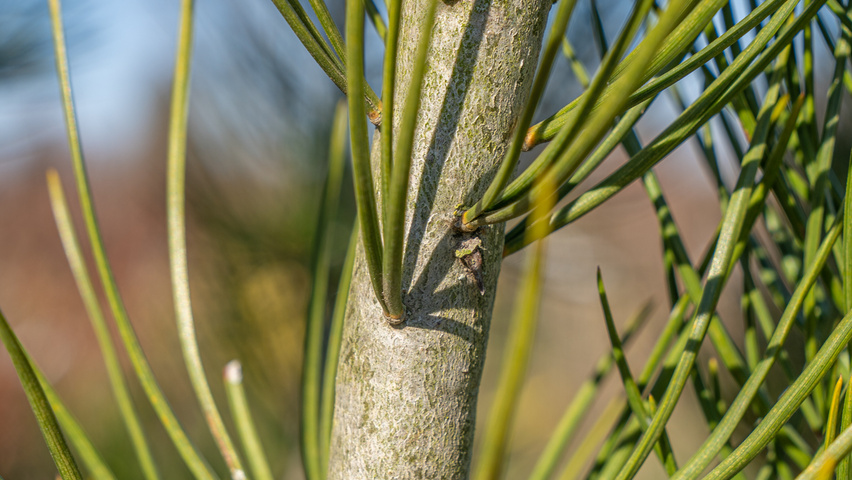
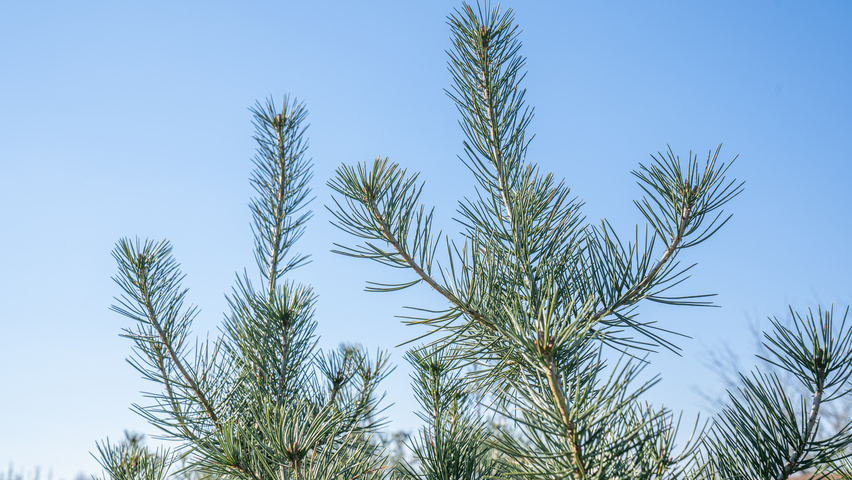
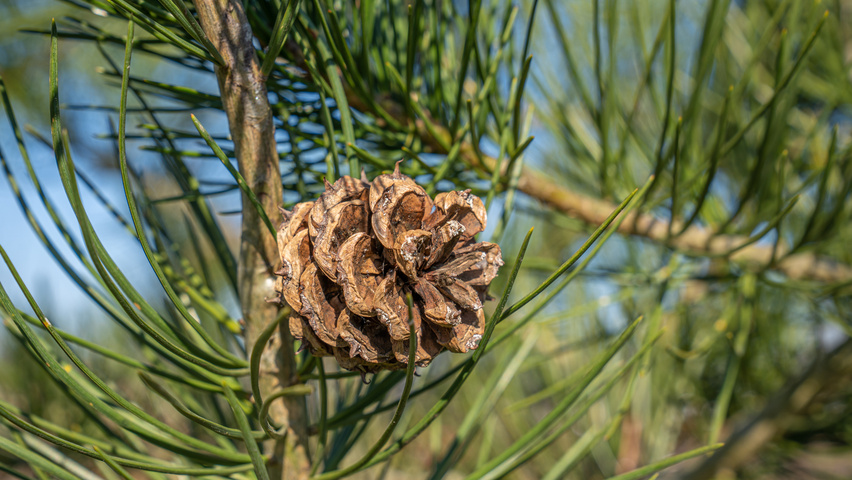
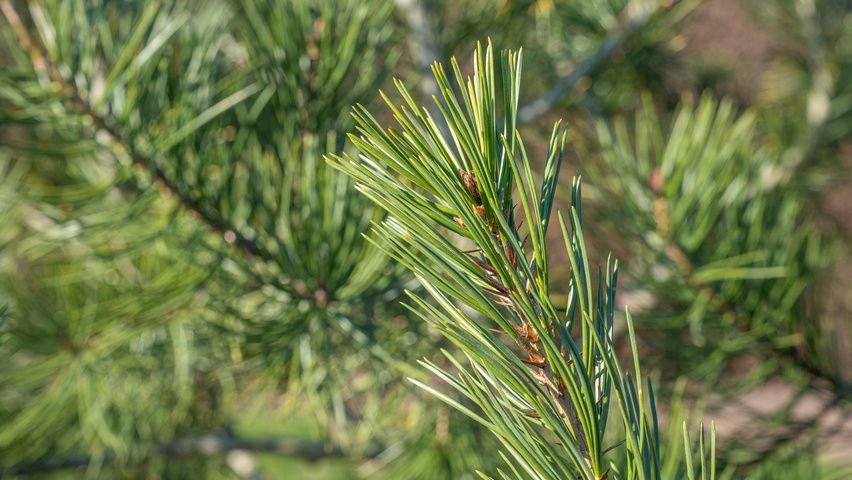
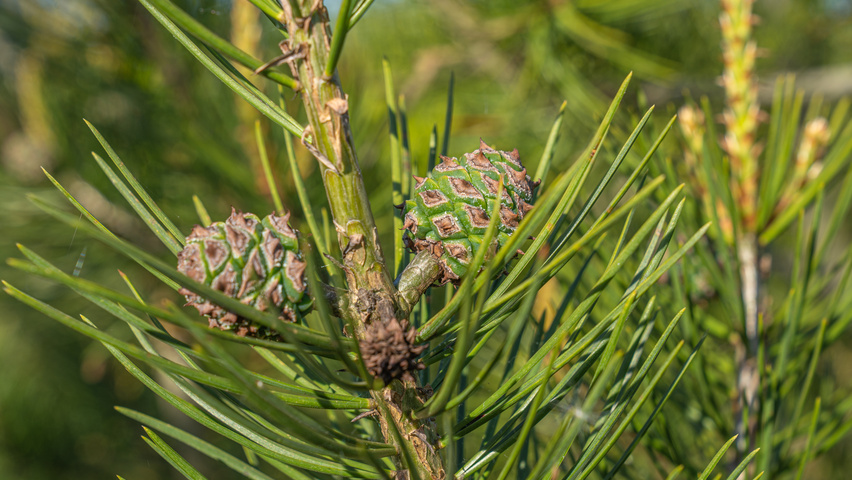
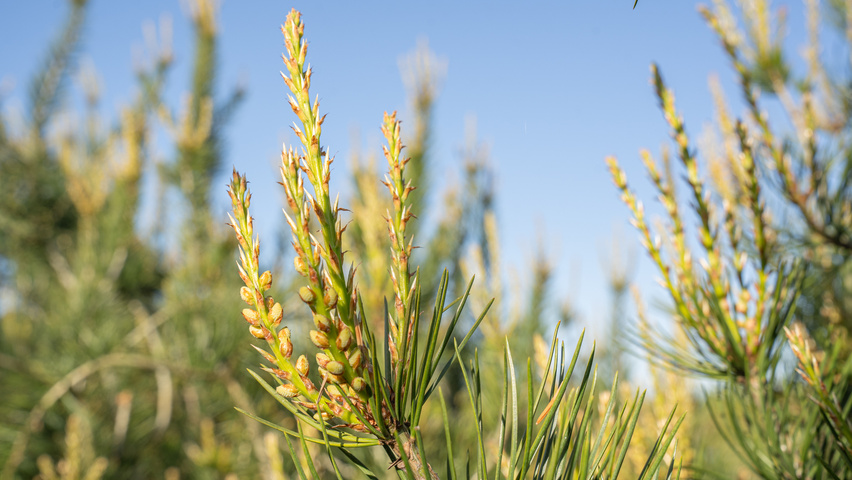
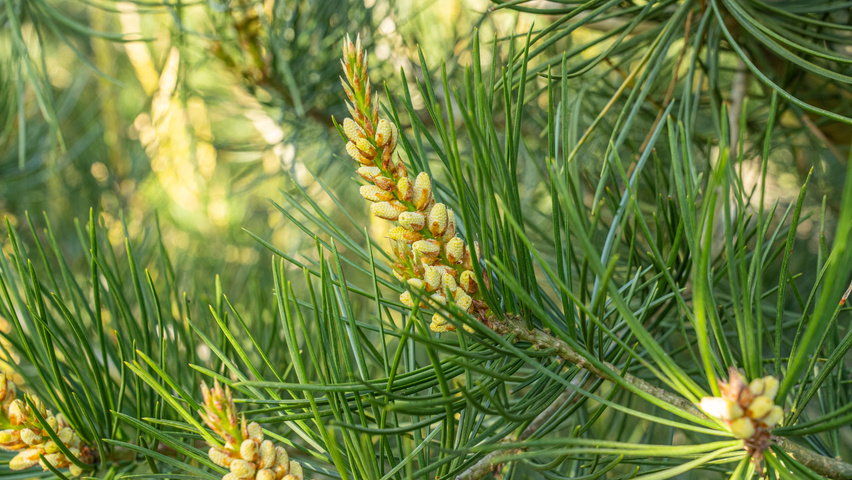
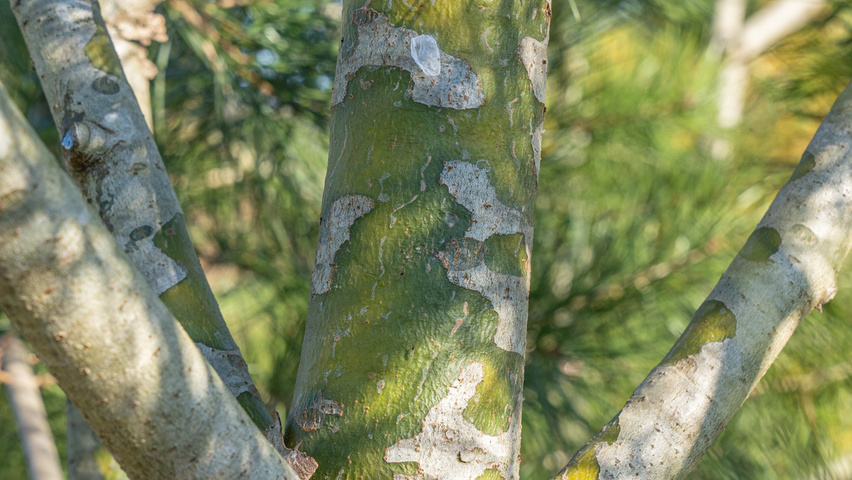
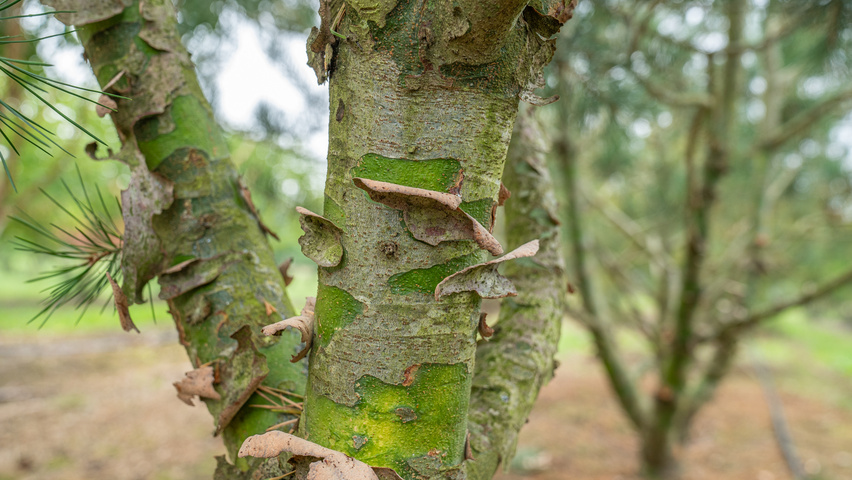
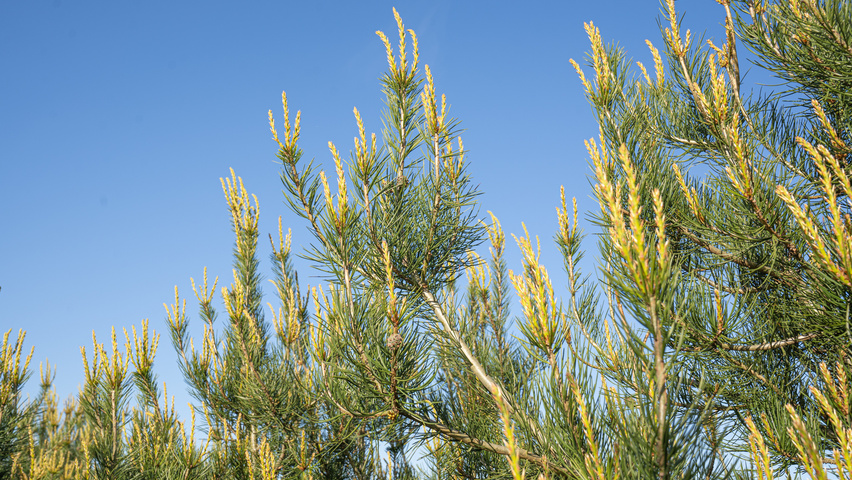
The lacebark pine is famous for its spectacular bark, which is light brown on young trees but soon begins to exfoliate in patches like Arbutus or Platanus, revealing bright green, light brown and reddish brown to metallic silver patterns. The colors are especially vivid on surfaces exposed to sunlight. The needles are about ten centimeters long, matte green, arranged in bundles of three, slightly curved and sharply pointed. They remain on the tree for four to five years and have a strong scent when crushed. The twigs are gray green, hairless and glossy. Pinus bungeana flowers around April and May with fragrant light-yellow flowers borne in clusters. The elongated cones are first light green and later light brown. The edible seeds are used in traditional Chinese medicine.

The rare Pinus bungeana is not only suitable for arboreta but is also an excellent addition to parks and gardens, especially in places where privacy is desired. It adds strong ornamental value as well. In the wild, lacebark pine grows at fairly high altitudes, but it has also been successfully introduced into many other environments. In mountain regions it grows on sunny, calcareous rocky soils, while in more northern parts of its range it is found on more acidic soils. Moderately fertile to fertile, well drained soils in lightly shaded to sunny locations provide the best conditions for Pinus bungeana.
Types of planting

Tree types

multi-stemmed trees characteristic trees conifers

Use

Location

park large garden cemetery

Pavement

none none

Characteristics

Crown shape

wide egg-shaped wide egg-shaped

Crown structure

semi-open semi-open

Height

15 - 30 m

Width

8 - 15 m

Winter hardiness zone

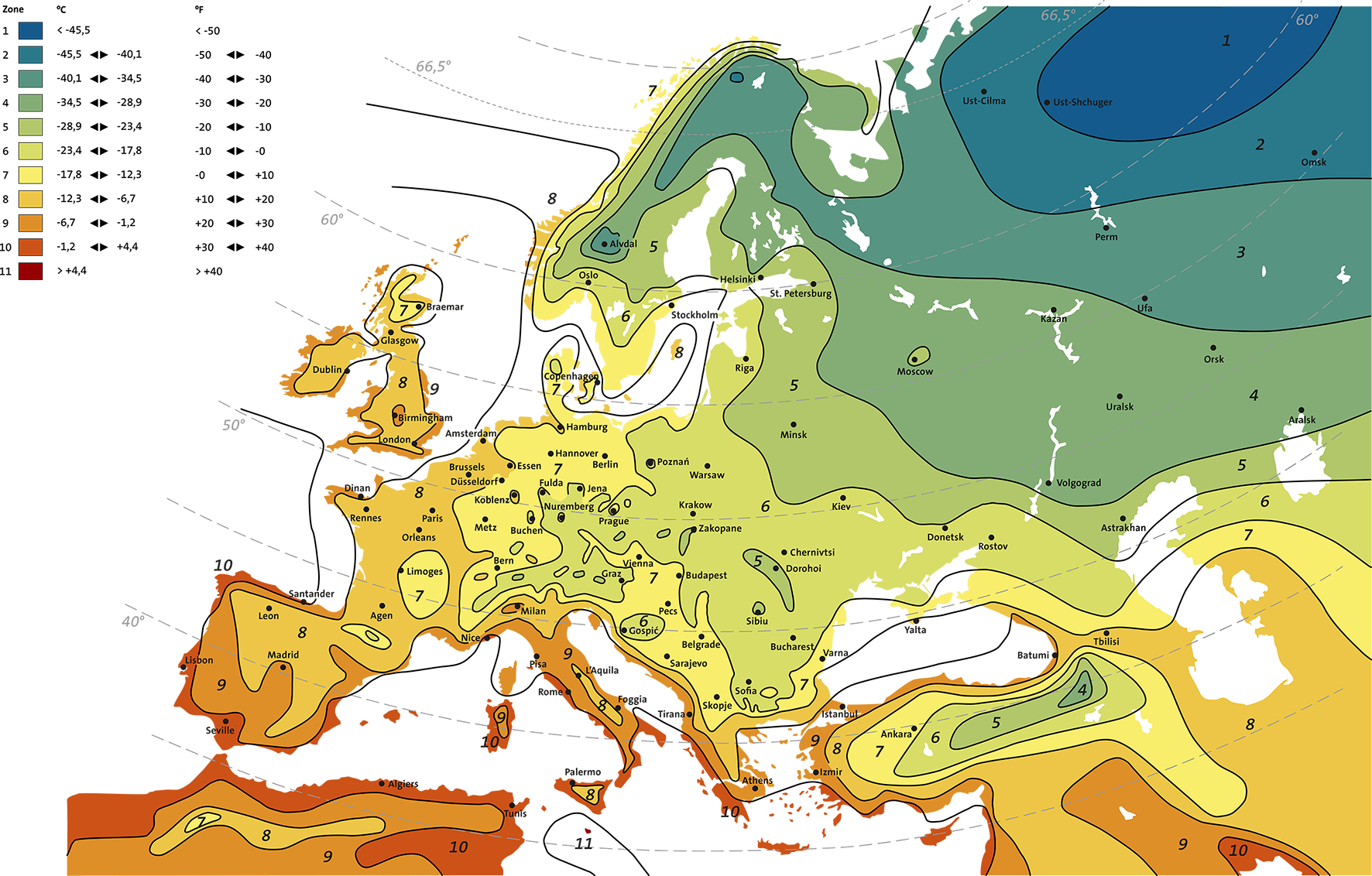
7A - 9B

Aspects

Wind

slightly tolerant to wind

Soil

loess sabulous clay light clay sand loamy soil

Nutrient level

moderately rich in nutrients rich in nutrients

Soil moisture level

moist

Light requirements

sun

pH range

acidic neutral alkaline

Extreme environments

tolerant to dryness tolerates heat curiosity

Get to know Ebben Nurseries

Visit our nurseries with multi-stem trees, climbing trees, trees for avenues and parks characteristic trees and solitary shrubs.

Make an appointment

Place order or further information?

Order this plant? Or would you like further information about Pinus bungeana? Make an appointment for a detailed planting recommendation.
Call +31(0) 485 31 20 21 or email one of our advisors directly.
Our planting advisors

Photos

Magnify

Seasonal colours

Pinus bungeana seizoenskleur
Jan Feb Mar Apr May Jun Jul Aug Sep Oct Nov Dec

Flowers

Flowers

raceme standing flower-scented

Flower colour

pale yellow

Flowering period

April - May

Leaves

Leaf colour

matt green

Leaves

evergreen needles or scales long needles scented with contusion

Fruits

Fruit colour

pale brown pale green

Fruits

striking cones

Bark

Bark colour

white pale brown brown-violet cinnamon-brown grey-brown red-brown grey-blue dark green grey-green grey

Bark

peeling smooth

Twigs

Twig colour

grey-green

Twigs

bare polished vertical branches long shoots

Root system

Root system

shallow slightly branched

For and by green professionals

The TreeEbb is a platform for and by green professionals, in which we collect knowledge and experience from the sector and make this available for users. All the details and photos are free to use for non-commercial purposes. Want to share your tree knowledge? Send photographs and additional information to treeebb@ebben.nl

Contact
Show filters Hide filters
Show comparison
View mood board
TreeEbb

TreeEbb

Geographic location
Winter hardiness zone
OK
Coastal area
OK
Use
Location
OK
Pavement
OK
Host plant/forage plant
OK
Planting concepts
OK
Types of planting
Tree types
OK
Multi-stemmed trees
OK
Crown structure
OK
Crown shape
OK
Topiary on stem
OK
Topiary
OK
Height
m
-
m
OK
Width
m
-
m
OK
Aspects
Wind
OK
Soil
OK
Nutrient level
OK
Soil moisture level
OK
Light requirements
OK
PH range
OK
Extreme environments
OK
Stage of succession
OK
Plant characteristics
Flowering period
January
-
December
OK
Flower colour
OK
Leaf colour
OK
Autumn colour
OK
Fruit colour
OK
Bark colour
OK
Special features
OK
English
View mood board
Show comparison
Your selection:

Sign up for our newsletter

×
Cookie settings

We use cookies when offering electronic services. A cookie is a small, simple file that is sent with the pages of this website and stored on the hard disk of your computer by your browser. This allows us to combine various requests for pages on the website and analyse users’ behaviour, for example. You can indicate which cookies you wish to accept using the settings below. Bear in mind that not accepting cookies will mean that part of the functionality of this website may not be available. You can find more information about the use of data and the various cookies in our privacy and cookie declaration.