The first years after planting
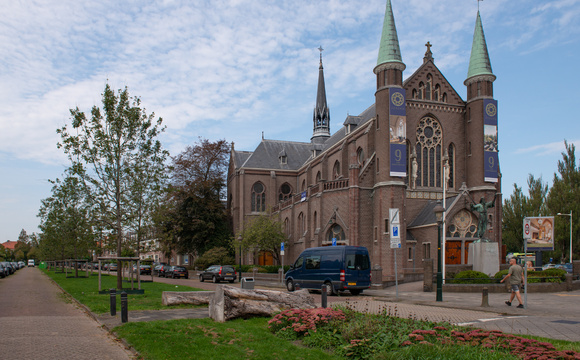

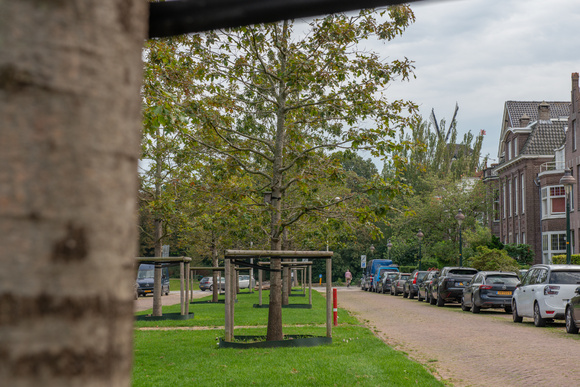
The first years after planting are crucial for the successful establishment of a tree. Its vulnerability lies in the environmental stress caused by transplanting. Roots are lost, the water table and soil composition are different in the new location, and the tree’s position in relation to sun and wind is also a changed factor. Because of this stress, the tree is more susceptible to disease, pests and drying out. By providing the right aftercare during the first years after planting, you give the tree the foundation for optimal growth. Only healthy trees can fulfil their ecological value and enrich the design.
When planting young trees, a watering rim is often installed. This is a plastic collar whose primary purpose is to prevent water from running straight away from the root ball during watering. During aftercare, it is advisable to remove the watering rim once watering is no longer necessary. If it is left in place, this can be very harmful to the tree. As the tree grows, the crown volume will increase, and during rainfall water will run via the crown and trunk to the base of the tree (stemflow). The larger the crown volume, the more stemflow will occur, and this water will collect at the base of the tree if the watering rim is still in place after all those years. This results in lazy roots, because the tree does not need to root beyond its crown projection in search of moisture, and it also encourages stem rot. Anchoring, both underground and above ground, must also be removed in order to allow the tree to learn to stand independently. This is best done gradually, starting on the sheltered side when tree stakes are used. With underground anchoring for planting in open ground, the anchoring will need to be cut through. Where the root volume will always remain limited, such as on a roof garden, the anchoring must not be cut through. In short, planting materials that have been used must be removed once their function has become unnecessary, in order to prevent damage.
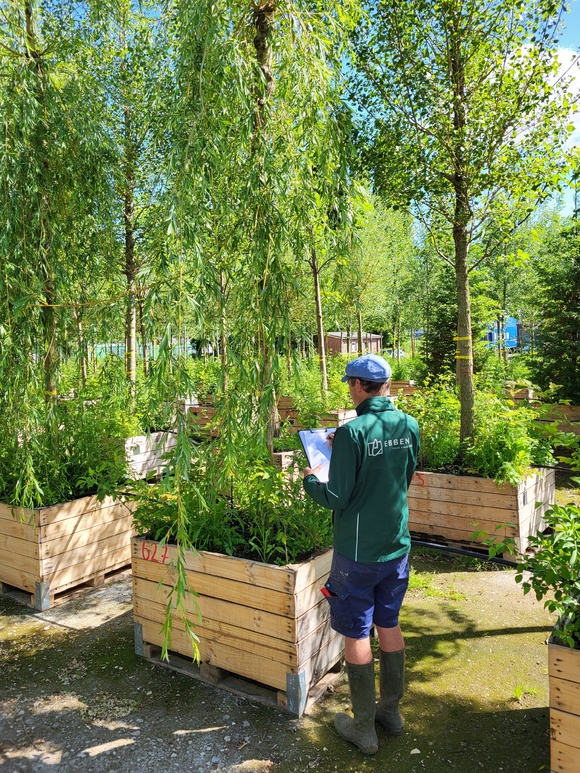
Regular checks for diseases and pests are essential in order to identify and address problems at an early stage. During the first years after planting, young trees have a limited root system because roots are cut during lifting. As a result, they are more vulnerable to stress factors such as drought, soil compaction and attacks by insects or fungi. Many pests can slow a tree’s growth by drawing nutrients from the leaves or sap flow, such as aphids or leaf miners. Fungi, on the other hand, can cause leaf loss, which reduces photosynthesis and therefore the vitality of the tree, because it can no longer produce sugars, as is the case with powdery mildew or rust. Root diseases such as Phytophthora can also reduce the regrowth and survival chances of a tree. By carrying out regular visual inspections and recognising symptoms such as discoloured leaves, wilting or bark damage, abnormalities can be detected at an early stage and action can be taken. Timely measures, such as control, soil improvement or pruning affected branches, help to keep the tree healthy. Read all about: Pests & diseases.