Transporting and unloading trees
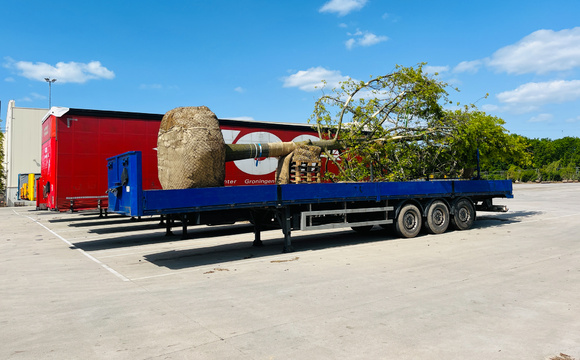

One of the main concerns when preparing trees for transport is preventing them from drying out. To prevent this, trees transported on open vehicles are covered with nets and the root ball is sometimes wrapped in tarpaulins. This is particularly essential when the leaves are beginning to emerge. Ebben nurseries has all the necessary equipment in-house and specialises in transporting, loading and unloading trees. We can take care of the entire transport process from nursery to planting site. We can also coordinate the planting work for large projects through Ebben Project Support.
Unloading trees must be carried out carefully to prevent damage to the tree and possible accidents. Particularly with large trees, there is a risk that the bark may be stripped during lifting if the sling is positioned incorrectly. This can cause irreparable damage to the tree. If the bark is stripped all the way around, the tree will not survive. As the planting season progresses, this risk increases, because sap flow starts up again in late winter and early spring. The layer beneath the bark, the cambium, then becomes more active, causing the bark to come loose more easily. The moment when sap flow starts is partly species-dependent. Some trees remain dormant much longer than others. Our specialists can explain exactly what should be taken into account during loading and unloading for each tree species.
There are two standard methods of unloading that we use: with a lifting strap around the root ball and a sling around the trunk, or with a root ball hook.
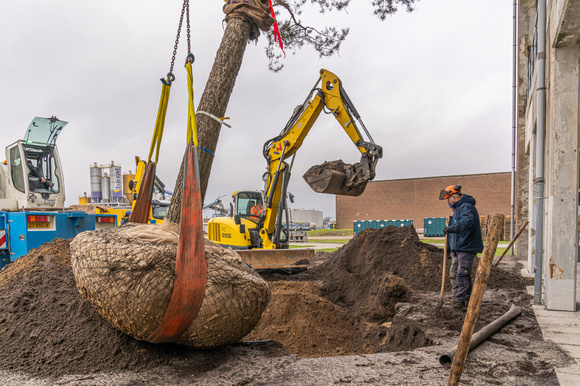
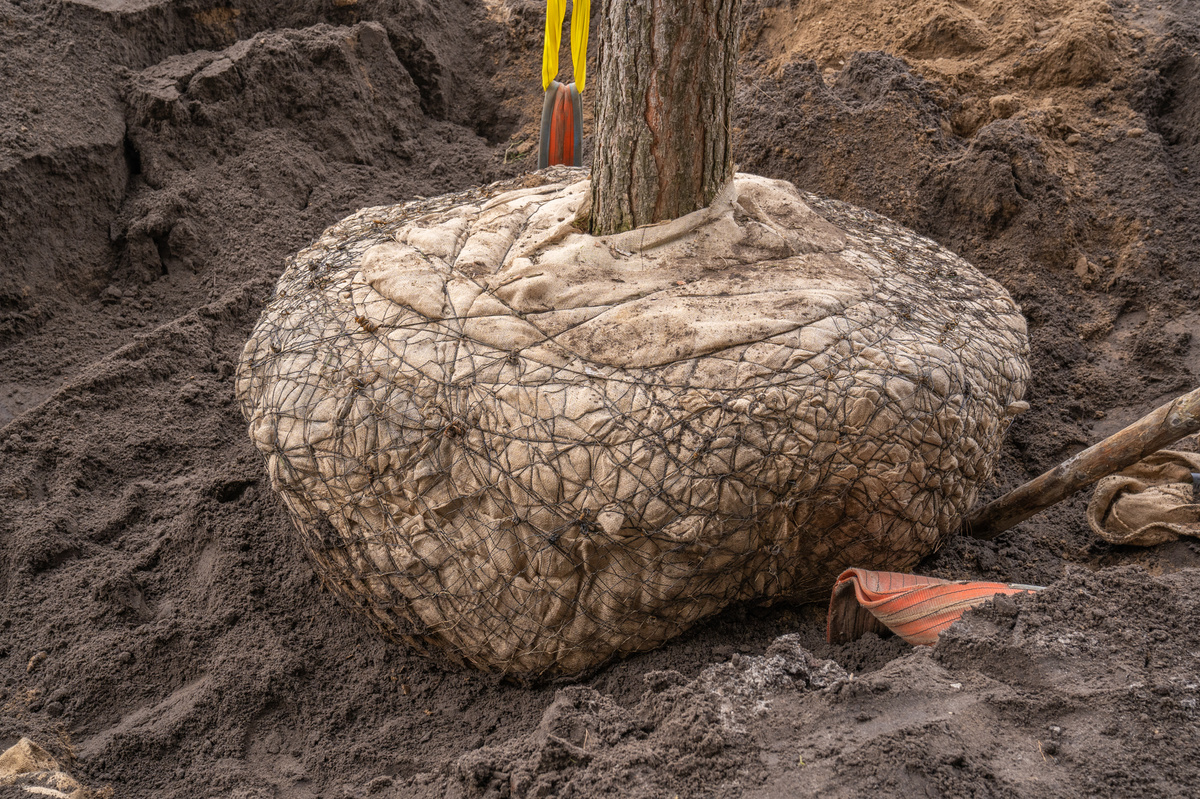
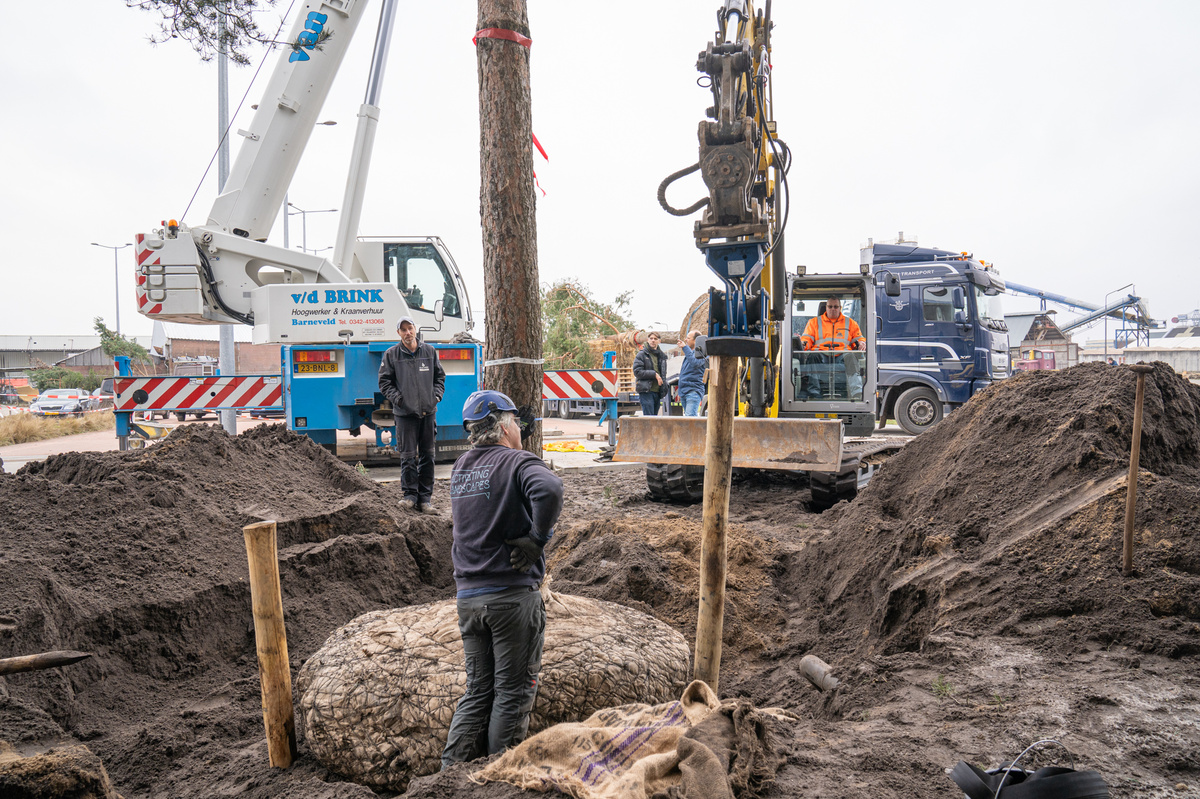
Unloading with a lifting strap requires precision. To prevent the tree from tilting during lifting, the lifting strap is positioned slightly off-centre beneath the root ball. This causes the weight to hang slightly to one side, so that the tree leans a little. The trunk sling ensures that the tree remains balanced and cannot make any unexpected movements. With large or vulnerable trees, the trunk sling serves solely as support to keep the tree in the correct position during lifting. The actual lifting is carried out entirely by the root ball; the tree is effectively resting on the lifting strap. To prevent damage to the trunk, the trunk must always be wrapped in jute where the sling is placed. Also, never twist a tensioned sling around the trunk.
Once the root ball has been placed in the planting hole, the lifting strap can easily be pulled out from beneath the root ball. In this way, both the tree and the root ball are handled safely and efficiently during the unloading and planting process.
In this practical example, we unloaded trees in Arnhem, Project Kleefse Waard, in collaboration with VIC Activating Landscapes.
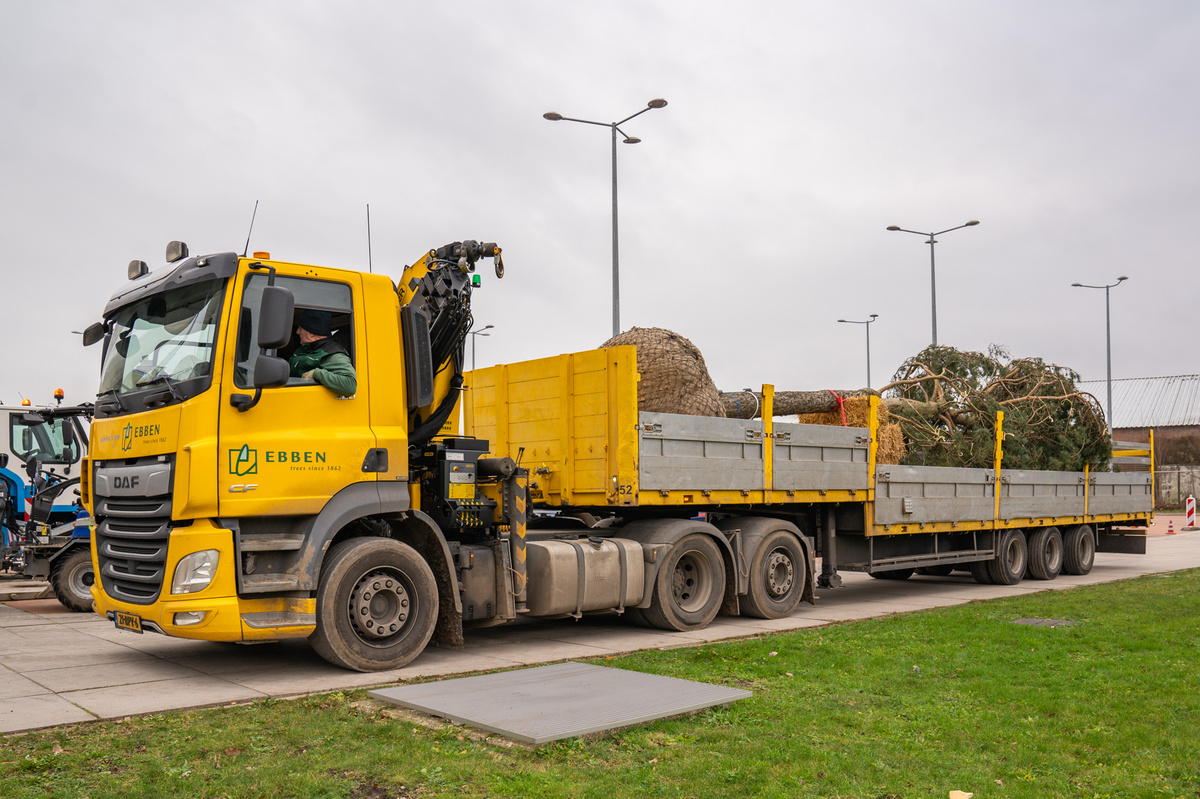
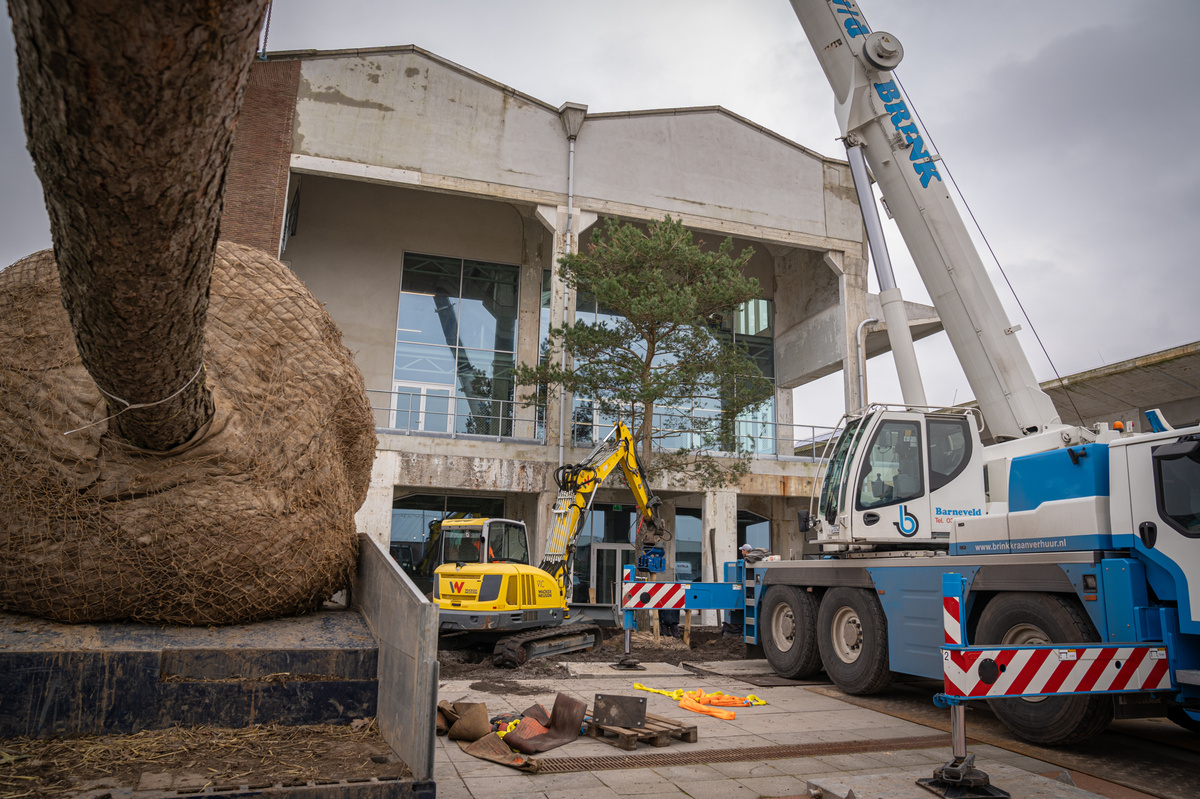
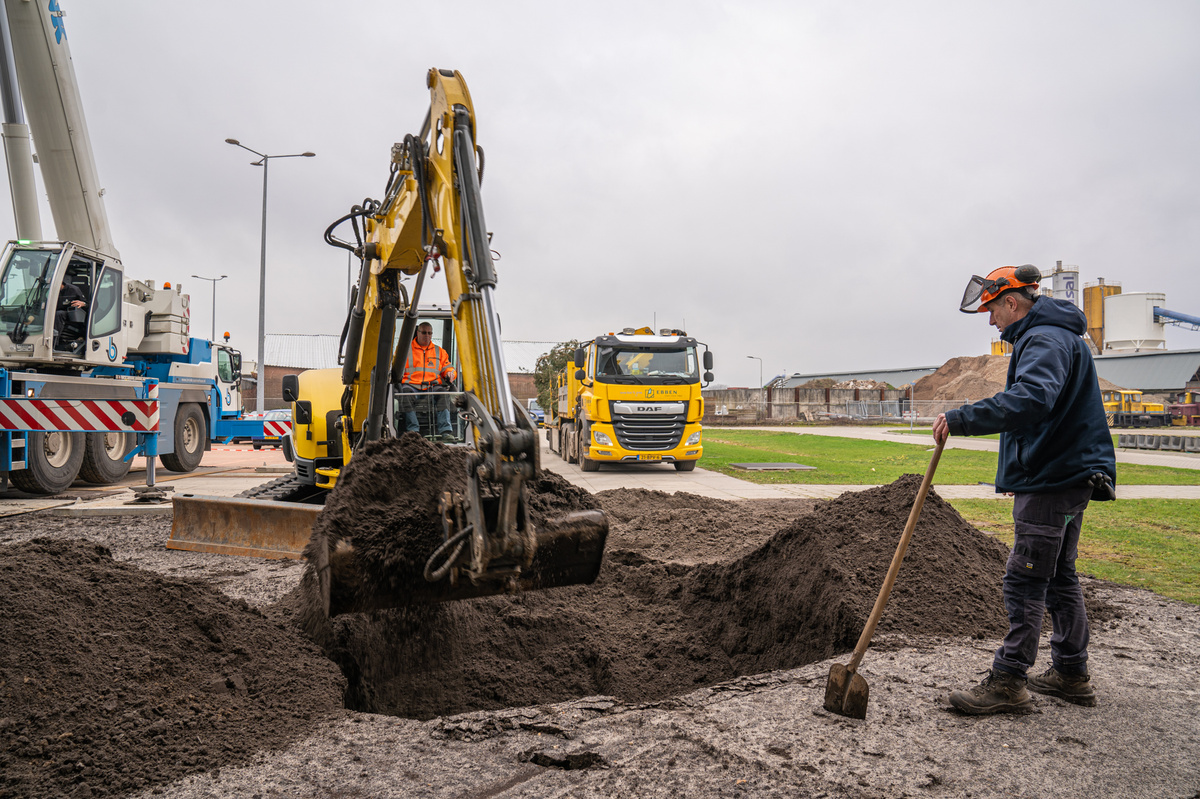
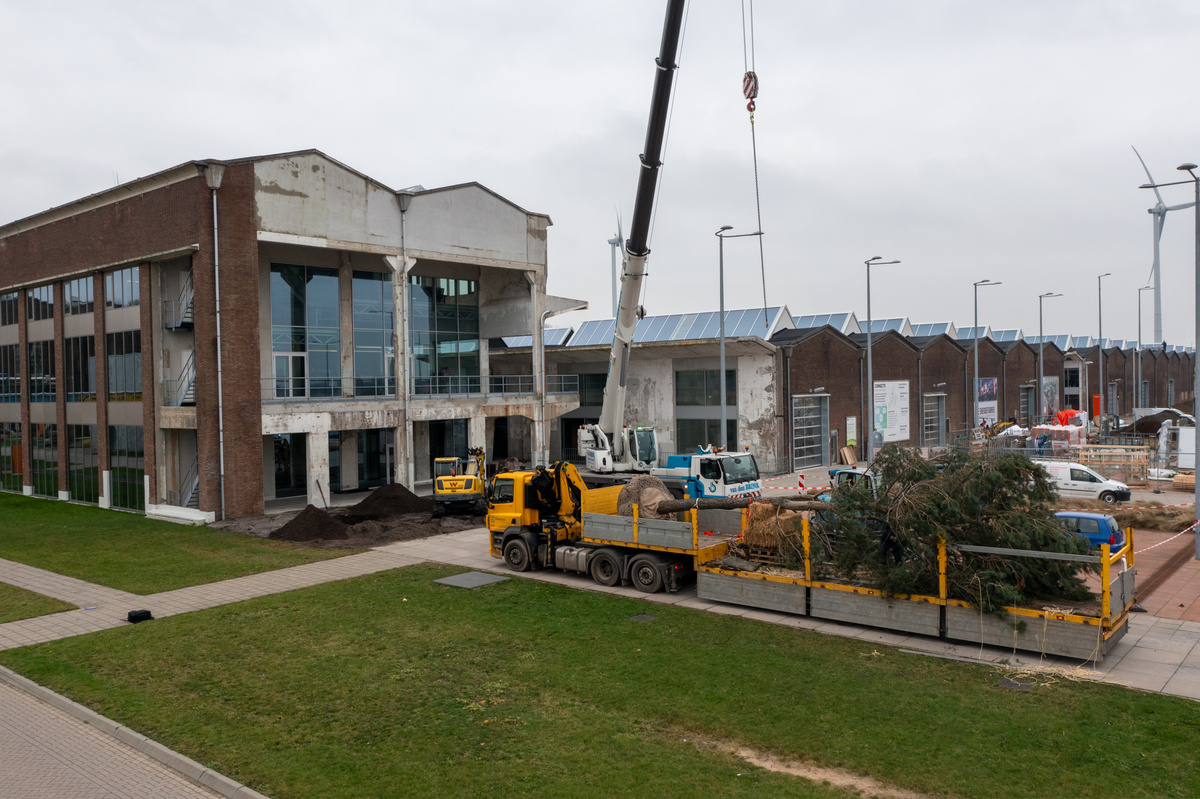
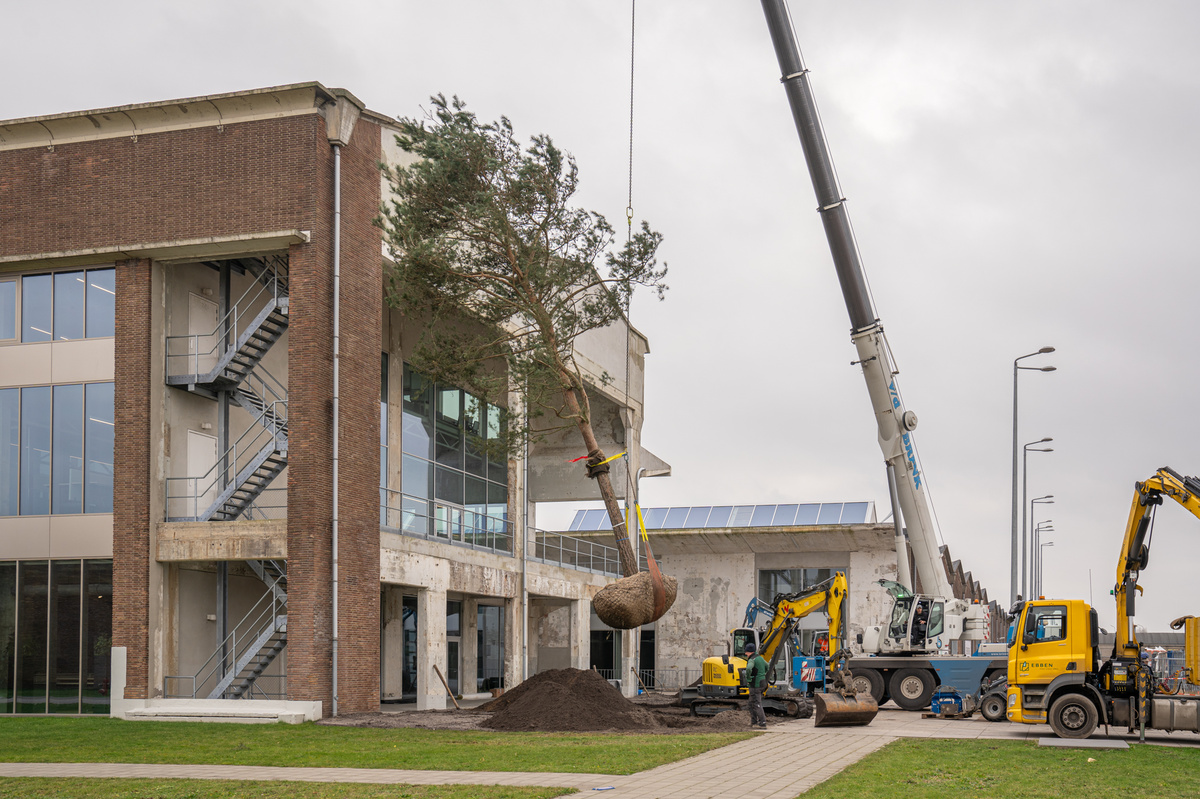
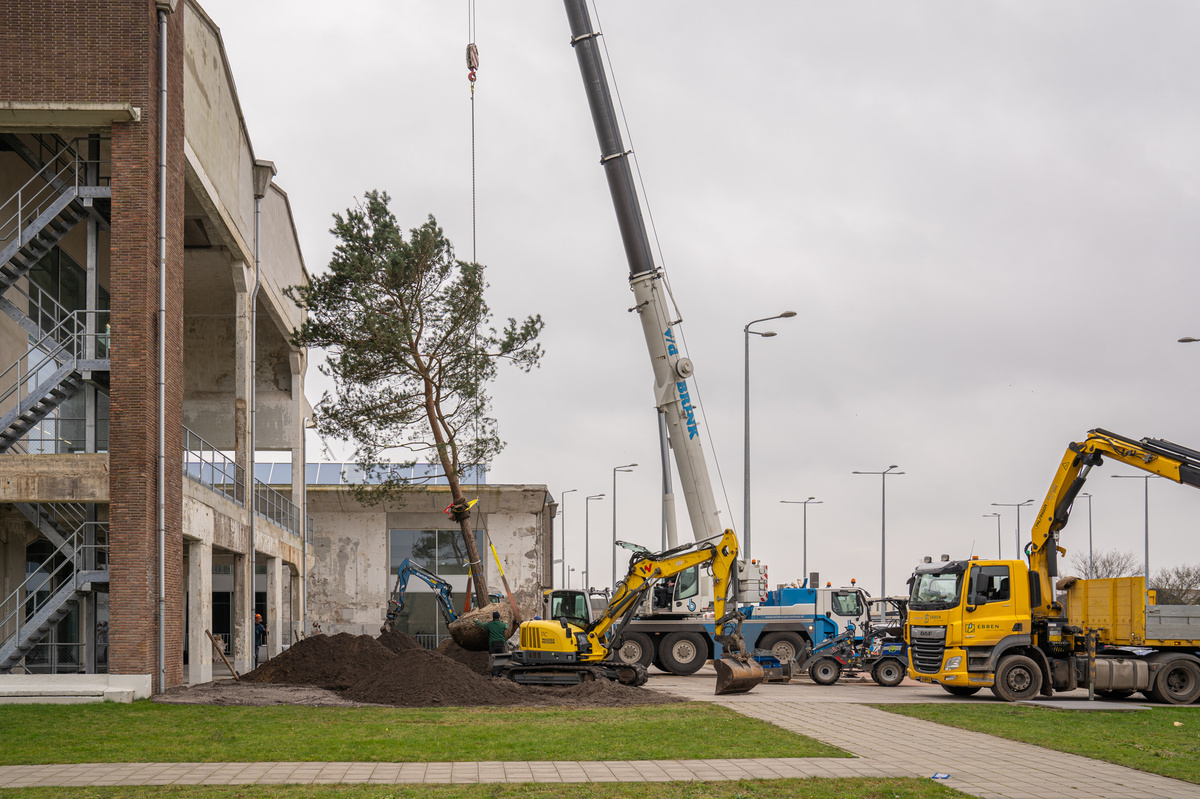
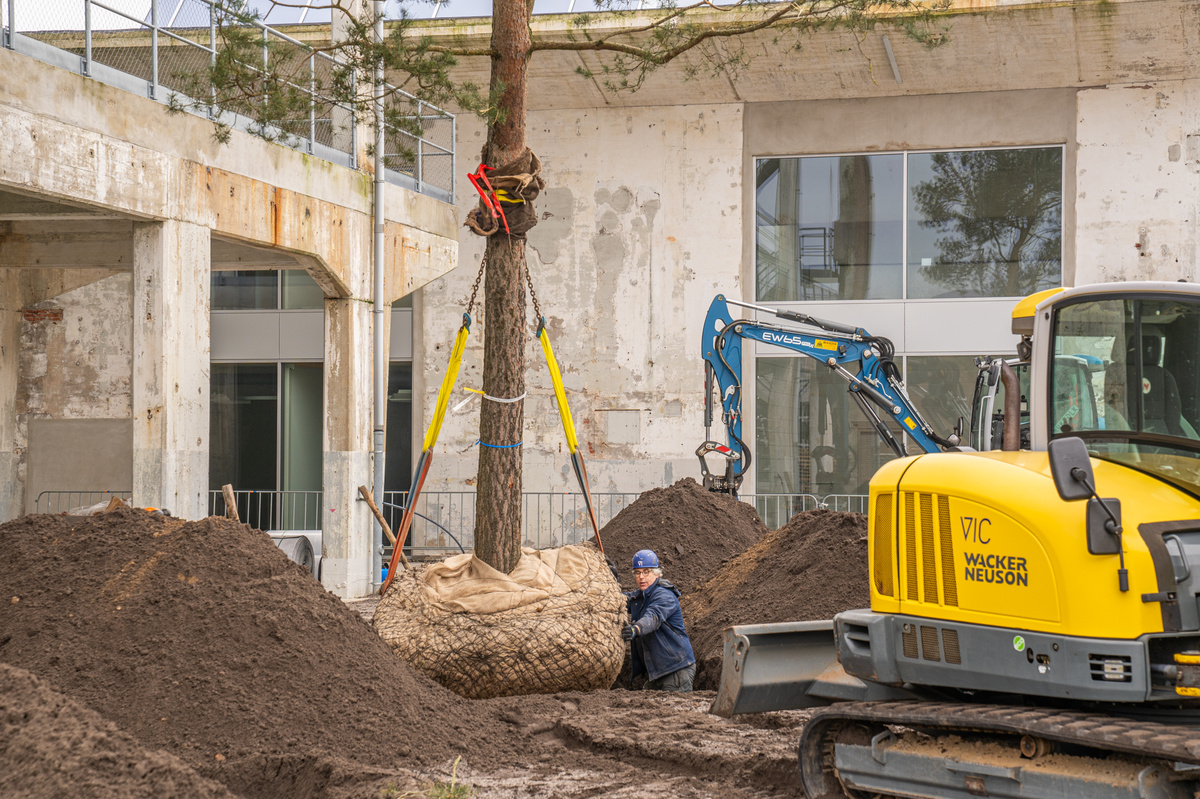
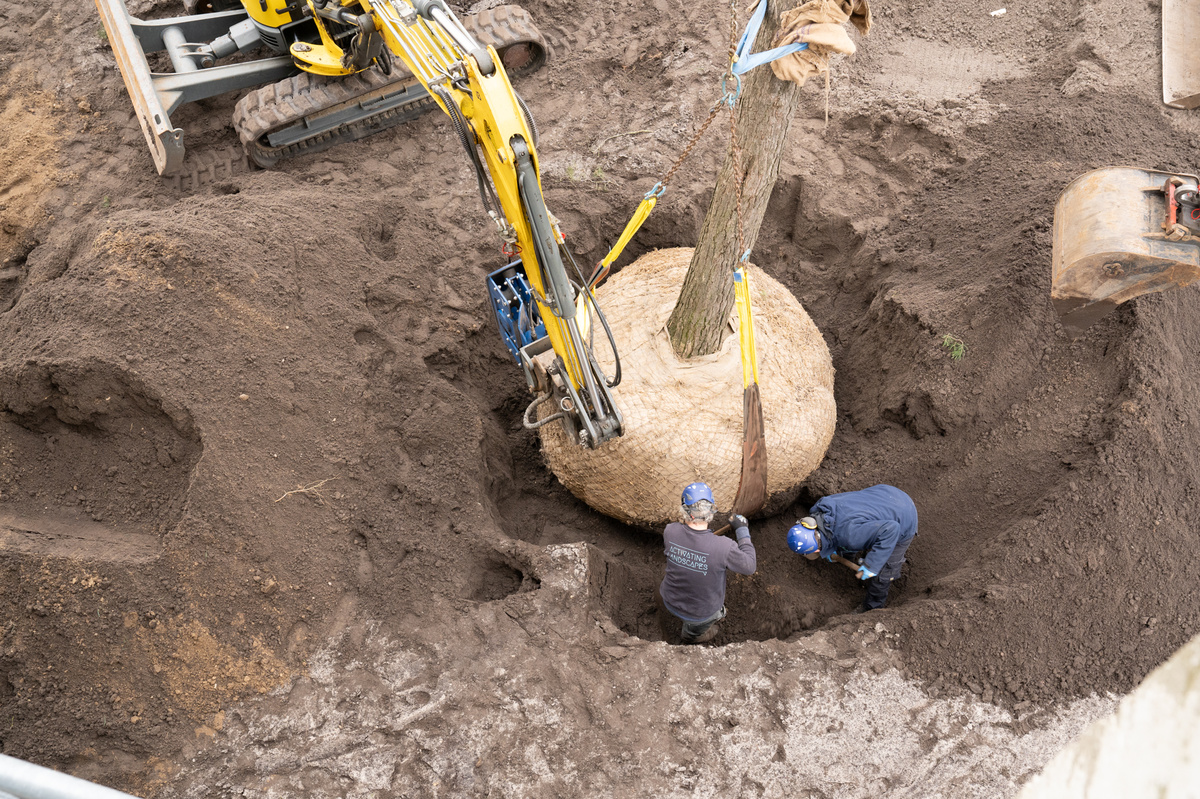
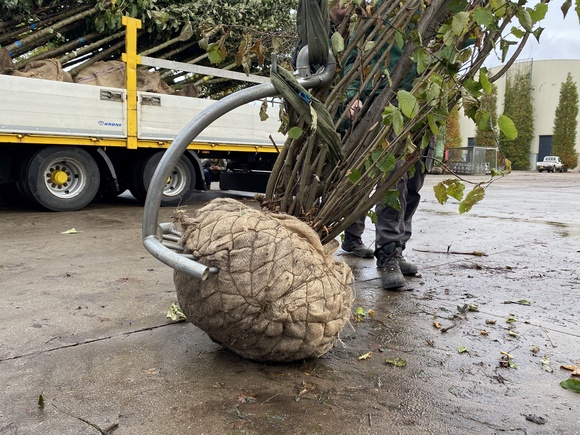
Multi-stemmed trees with a trunk circumference of up to and including 30 centimetres per stem and/or a root ball diameter of up to 80 centimetres are preferably loaded and unloaded using a root ball hook. The hook is inserted low into the root ball so that it bears the weight of the tree. Never unload root balls that are too large with a root ball hook, as the wire basket may tear open or the trunk may be damaged because the weight would then have to be carried by the trunk sling. Larger multi-stemmed trees are unloaded with a strap around the root ball and slings to the rear stems. A sling around only one of the stems will inevitably cause damage to the bark. Make sure that the landscape contractor is familiar with the correct way of loading and unloading multi-stemmed trees, so that the necessary equipment is available.
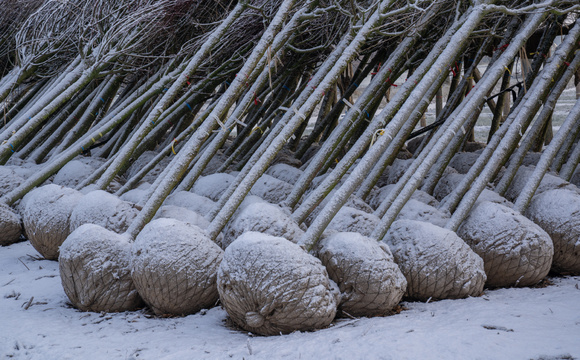
If, due to circumstances, trees cannot be planted immediately upon delivery, they must be placed in storage until the time of planting. Measures are then required to protect the tree against drying out. For short-term storage - one to two days - it is sufficient to protect the root balls with a tarpaulin or cloth. For long-term storage, and when bare-root trees (without a root ball) are delivered, proper heeling in is essential. This can be done by protecting the root balls with a thick layer of straw or covering them with a layer of sand. With root-balled trees, it is important that the root balls do not dry out and receive sufficient water in warm weather. In frosty conditions, it is important to cover the root balls with straw or jute.