Watering newly planted trees

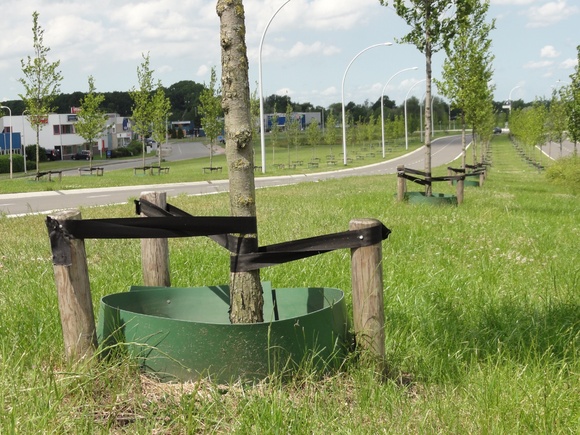
- Create a watering rim to prevent water from running off.
- Give water in a few large amounts rather than many small ones.
- Use a soil auger to check the moisture content and whether the water is actually penetrating the soil.
- Make holes in the soil to help the water penetrate more effectively.
- Preferably water in the evening, when it is cooler and less water evaporates.
- You will only see the result of watering after at least 12 hours.
- Keep an eye on the tree’s drought symptoms and adjust the watering accordingly.
- Use this on a weekly basis: water 3 times a week, with two days in between without watering.
- The soil must be given time to dry, to warm up, and the roots must be given access to air.
The basis for successful young planting is choosing the right species. You can water as much as you like, but if the chosen tree species prefers wet clay and has been planted in light sandy soil, you are creating a great deal of work with a disappointing result. Every successful planting begins with a soil analysis. By using a soil auger, you can get a picture of the soil type and any impermeable layers. The species choice is then based on that, partly depending on the root pattern. Trees with a taproot, for example, are suitable for dry soil because they are able to root more deeply.
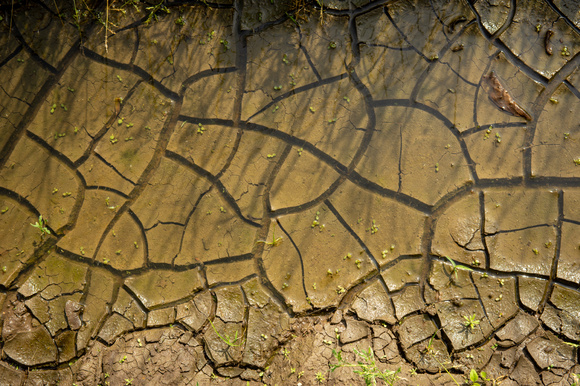
In both cases - a shortage as well as an excess of water - the tree will die, because in the case of excess water no oxygen can reach the roots. The amount of water and the frequency of watering must therefore be continually adjusted to the conditions. To determine whether the soil is dry and the tree needs water, it is not enough to look only at the soil surface. After a rain shower, the soil may appear moist enough while the deeper layer is dried out, or after a short dry period the soil may look too dry while the deeper layer is still sufficiently moist. To determine the actual moisture content, the moisture level at a depth of fifteen centimetres must be checked. Monitoring the moisture condition is important throughout the entire period in which the tree is in leaf.
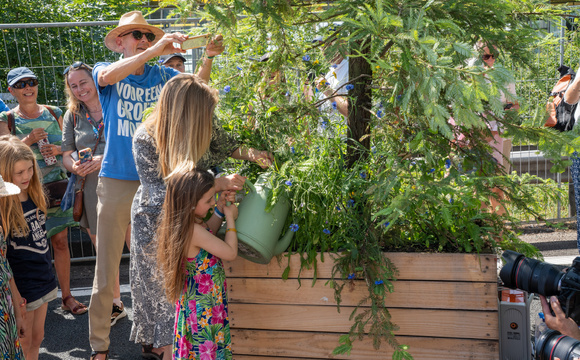
Trees can be watered in different ways, either by hand or by automatic watering (irrigation). The essence of proper watering lies in the right amount of water and the number of watering sessions (interval). It is advisable to start by creating an earthen rim around the root ball or by installing a watering rim. This prevents the water from running straight away from the root ball. Ideally, this should be ten centimetres larger than the diameter of the root ball and should project 15 to 30 centimetres above ground level. It is also important to water the root ball evenly all around, to allow the soil time to absorb the water, and to give the tree one large amount of water at a time rather than scheduling several small watering sessions. With a large volume of water applied to the root ball, the pressure will help the water penetrate deeper into the soil. In extremely hot weather, watering may be given more frequently, but always with a dry interval of at least three days so that the soil can dry out somewhat and the roots are encouraged to search for water themselves. In the case of smaller shrubs and hedge planting, it may also be advisable during long hot periods to water the crown, as this cools the leaves, washes away air pollution and, because leaves are able to absorb water, influences the moisture balance. Preferably do this early in the morning so that the leaves dry during the day and are less susceptible to fungal infections.
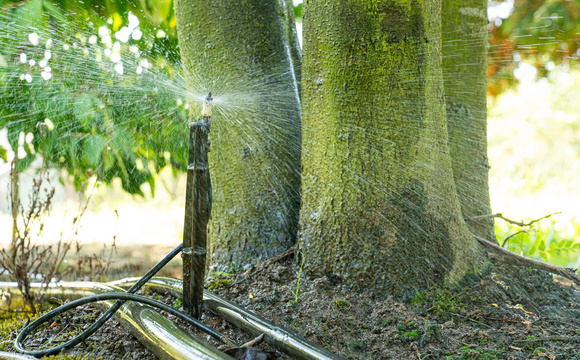
The amount of water to be given and the time between watering sessions depend on several factors. We therefore advise only a general guideline, which is suitable provided you keep an eye on the symptoms of moisture deficiency. A tree starts to transpire moisture from the moment the buds begin to swell and move. The amount of water required varies throughout the growing season and depends on the tree’s growth stage and crown volume. When a tree is just coming into leaf, it requires less water than when it is in full leaf in mid-summer. The number of watering sessions and the time between them (the interval) are not calendar-based, but drought-based. As the temperature rises, evaporation increases, and so does the number of watering sessions. Under extremely hot conditions, watering may even be necessary twice a week. From the second year after planting, watering can be reduced. In the third growing season, watering is generally only required a few times during the season if conditions remain dry for several weeks.
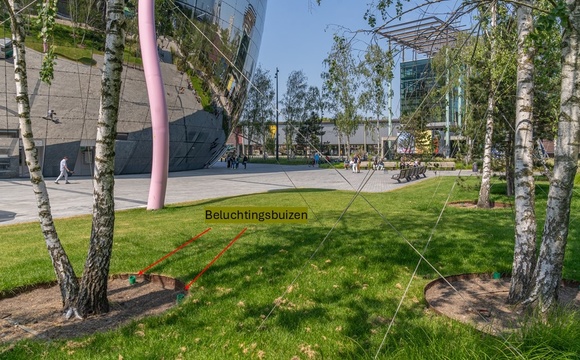
Trees planted in an urban environment, where the planting hole partly lies beneath paving, are often fitted with an aeration tube at planting. This is a flexible tube with vertical perforations that ensures oxygen exchange with the soil and allows harmful gases to escape from the root zone, usually produced by the decomposition of organic material. The system is primarily intended to ensure that the correct oxygen level is maintained around the underside of the root ball and root zone. The ends of the aeration system project above ground level. In extremely dry weather, you may choose during watering to place the hose into the aeration tube. The advantage of this is that the water reaches the root zone directly. If this is done occasionally, especially during extreme drought, it can be a very effective method of watering. However, it can also have disadvantages. The top of the root ball will dry out more, and this is precisely where many fine feeder roots are located, through which the tree absorbs a great deal of moisture. Watering through the aeration tube can also counteract the very purpose for which it was intended, because the applied water reduces the oxygen content where it is actually needed. In short, watering via the aeration tube from time to time is fine, but do make sure that the root ball is also watered from above to prevent it from drying out in the middle. It is strongly discouraged to put the hose into the aeration tube at every watering simply for convenience.
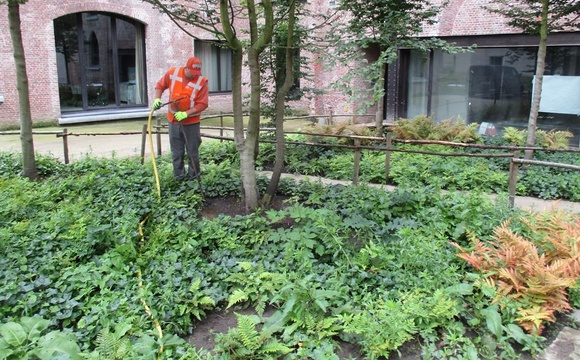
A simple way to test whether watering is needed is by checking the moisture condition of the soil. Take a handful of soil from the root ball at a depth of approximately 15 cm. If the soil feels very dry and falls apart into dry particles, water should be given. If the drought continues and watering is delayed, the leaf margins will start to curl and yellow-brown leaf edges will appear. If the soil can be squeezed into a ball, the moisture content is at the correct level. If water comes out of the soil when squeezed, the soil is too wet and there is a risk of decline caused by root rot; if this continues, it will show itself in yellow discolouration of the leaves. The symptoms of trees that are too wet closely resemble those of trees that are too dry. The pattern is, however, the reverse: in the case of drought stress, the leaves wither from the outer edge of the crown inwards. In the case of a soil that is too wet, the pattern is dieback from the centre of the crown outwards towards the edge. Trees growing in paving need more supplementary watering than trees in more natural conditions, such as in a planting bed, possibly even after three growing seasons, so take this into account during aftercare.
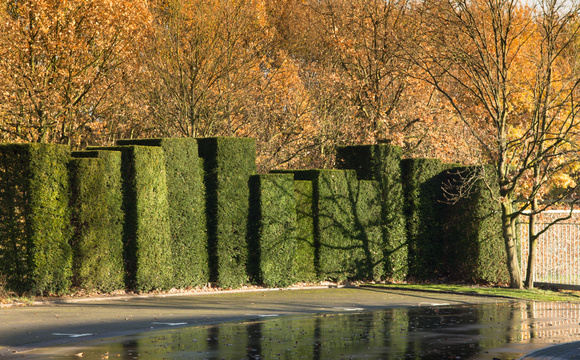
For a number of tree species, it is advisable to pay extra attention to proper watering. Take, for example, a newly planted yew hedge in spring: the plants have a relatively small root ball and a great deal of foliage. They therefore lose a lot of moisture and struggle during a dry spell in spring, especially in combination with a dry wind. Desiccation is then a real risk. In any case, it is advisable to give evergreen species extra water during the first months after planting. During a dry period, it may also be advisable with conifers to spray water over the crowns towards the evening, so that moisture loss through the needles is reduced.
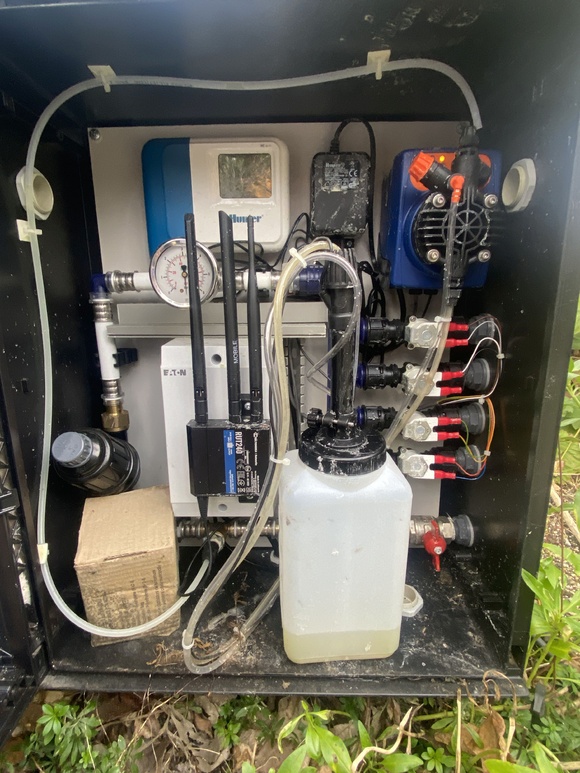
When using a sprinkler system (irrigation system), watering is computer-controlled. Through a connection with local weather stations and a timer, water can be supplied according to a pre-set programme, with adjustments made for extreme weather conditions. If the flow meter also transmits its data per watering session, this has the advantage that you receive a warning in the event of a malfunction. Water reaches the planting bed at the tree via an underground pipe, where, by means of a dripper, it is directed very precisely to the root ball. It can also be sensible to use this system when it is raining. During rain, the water falls on the tree crown and often lands just outside the crown’s root zone. As a result, a rain shower can still lead to a moisture deficit around the root zone. This is very deceptive, because you would not expect a tree to suffer from a moisture shortage during rain. Drip lines are also being used increasingly, especially when several trees are planted together, as this is an effective way of watering. With these forms of watering, it is important to ensure that the quantities are correct; visually, it is much more difficult to estimate how much water is actually being applied. The openings in drip lines can also become blocked, which may cause the tree to suffer unexpected drought stress. To ensure that the trees in a planting plan receive the correct amount of water, without the surrounding planting receiving too much, it is essential to give the trees a separate watering zone from the rest of the planting.
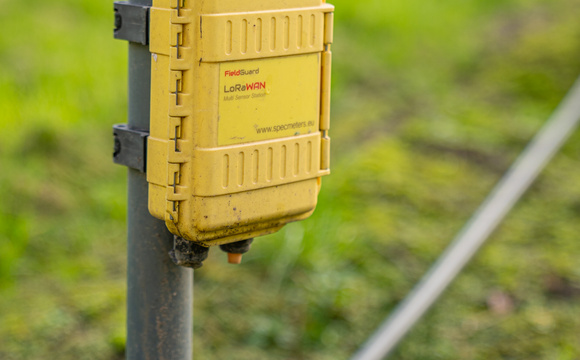
In many tree planting schemes, we are increasingly seeing the use of soil sensors. These sensors continuously collect data and provide a good indication of local moisture percentages. The data can be read remotely via a dashboard and used to control watering. When used with an irrigation system, for example on a roof garden, the sensors can also control the irrigation directly, making it possible to use water as efficiently as possible. The advantages of using sensors are: they can help to prevent losses by signalling moisture deficiency in time, and they can save watering sessions by giving water not on the basis of a schedule but on the basis of actual need.
It is important to know that, when using soil sensors, they only measure the moisture percentage in the soil at the exact point where the sensor is placed, and that all data from the sensors are only indicative. Relying on the sensors alone can therefore give a distorted picture. If the soil is moist around the sensor, this says nothing about the condition of the tree itself, so on-site inspection is still required. Correct placement of the sensor is also important. It should be positioned as close as possible to the roots of the trees, outside the watering rim. It may also be an option to connect the sensor to a local weather station. This allows you to anticipate local weather conditions and determine the optimal irrigation moment as accurately as possible.