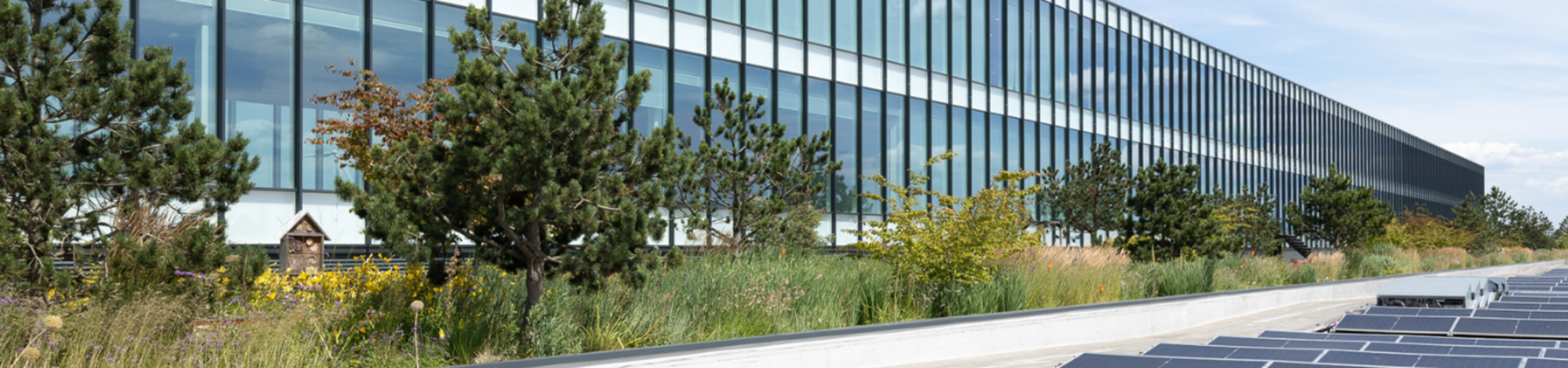
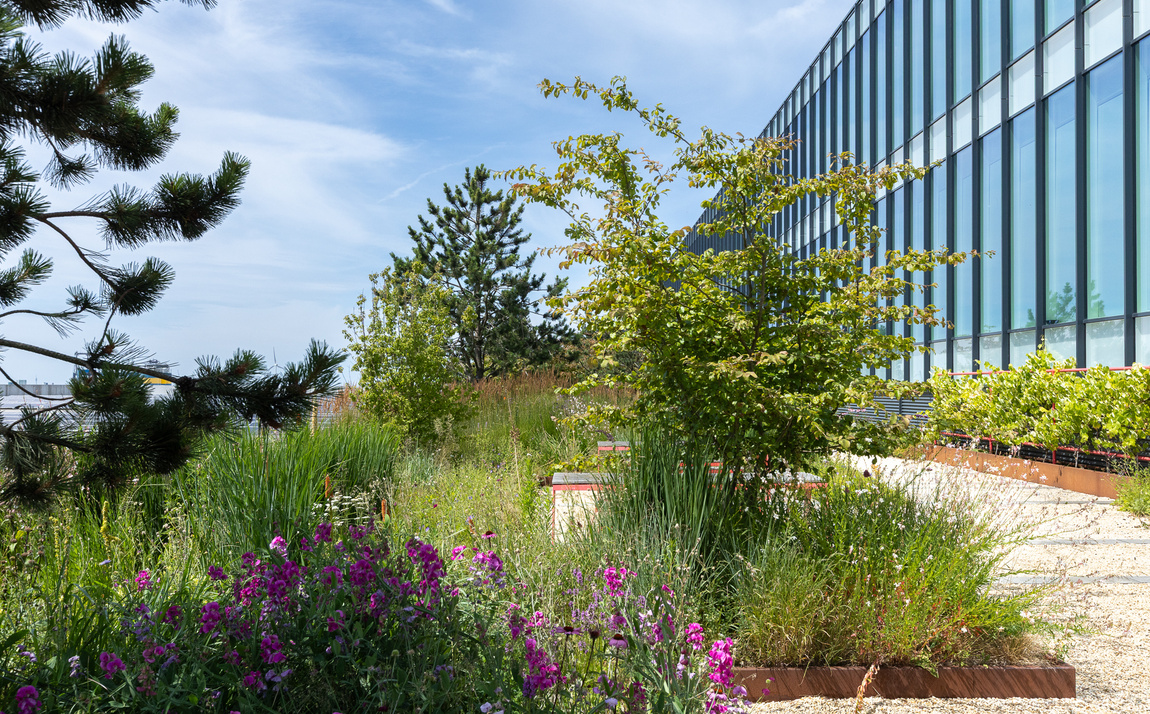
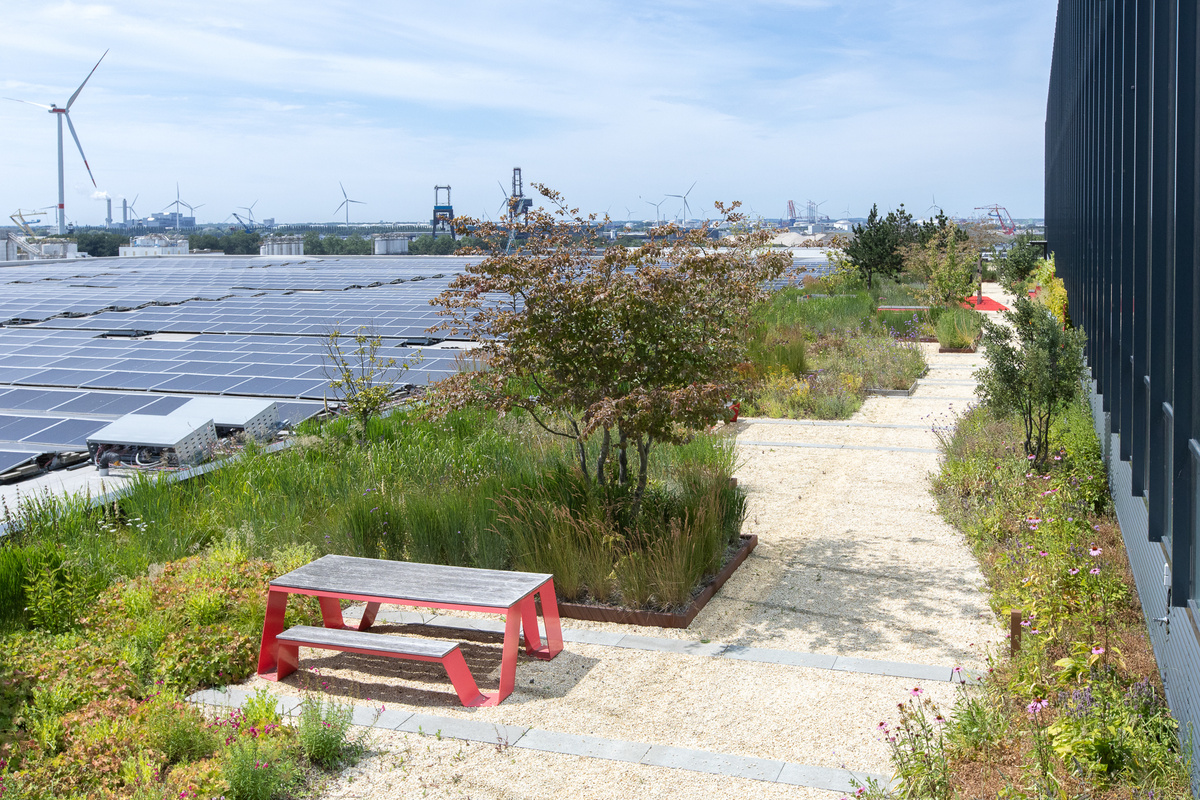
High above Amsterdam’s harbour area lies an unexpected green retreat. On the roof of the Amsterdam Logistics Cityhub, an expansive rooftop garden has been created where logistics, sustainability and wellbeing come together. In an environment dominated by infrastructure and distribution, the garden adds a new layer to the building, a place where employees can quite literally step into nature. The project shows how even in an intensively used logistics complex, space can be made for nature, connection and relaxation.
“This roof garden demonstrates that even within a heavily used logistics complex, there is room for greenery and relaxation.”
Vision and ambition
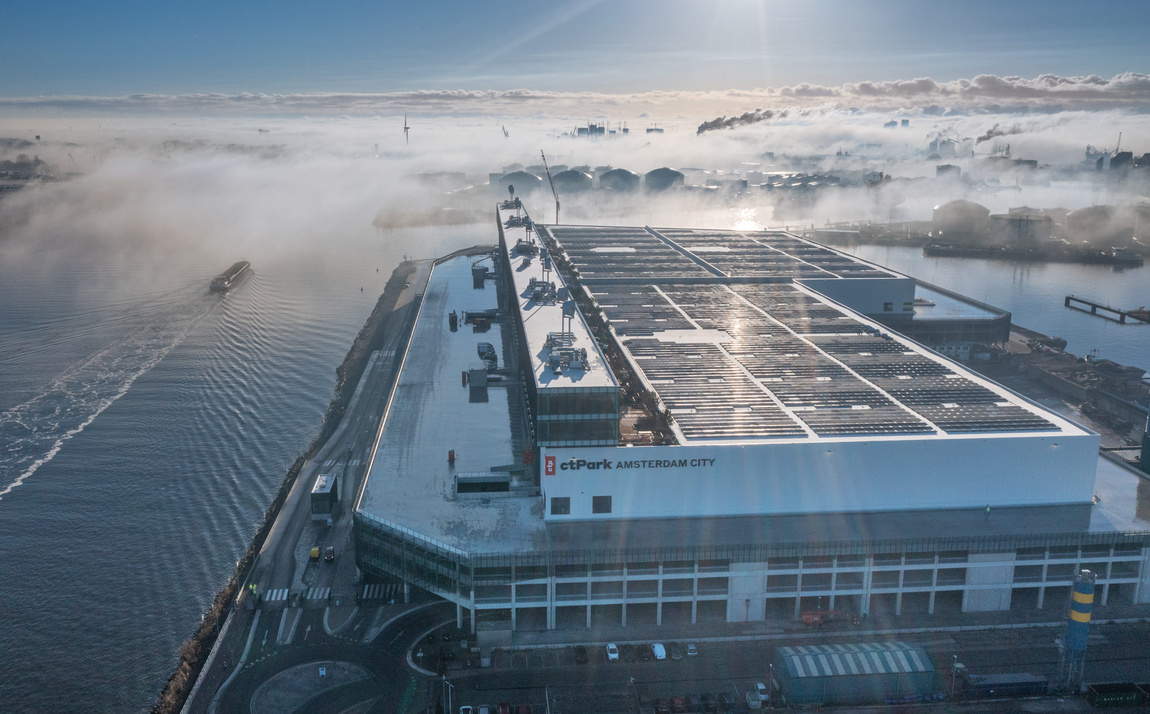
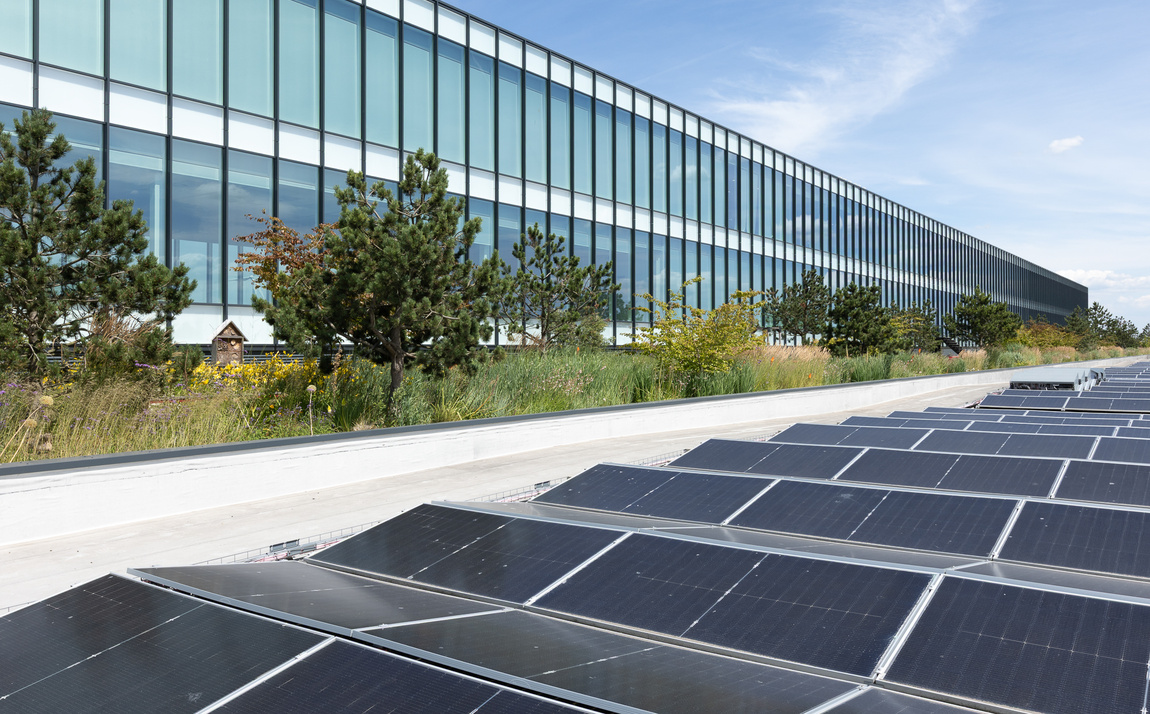
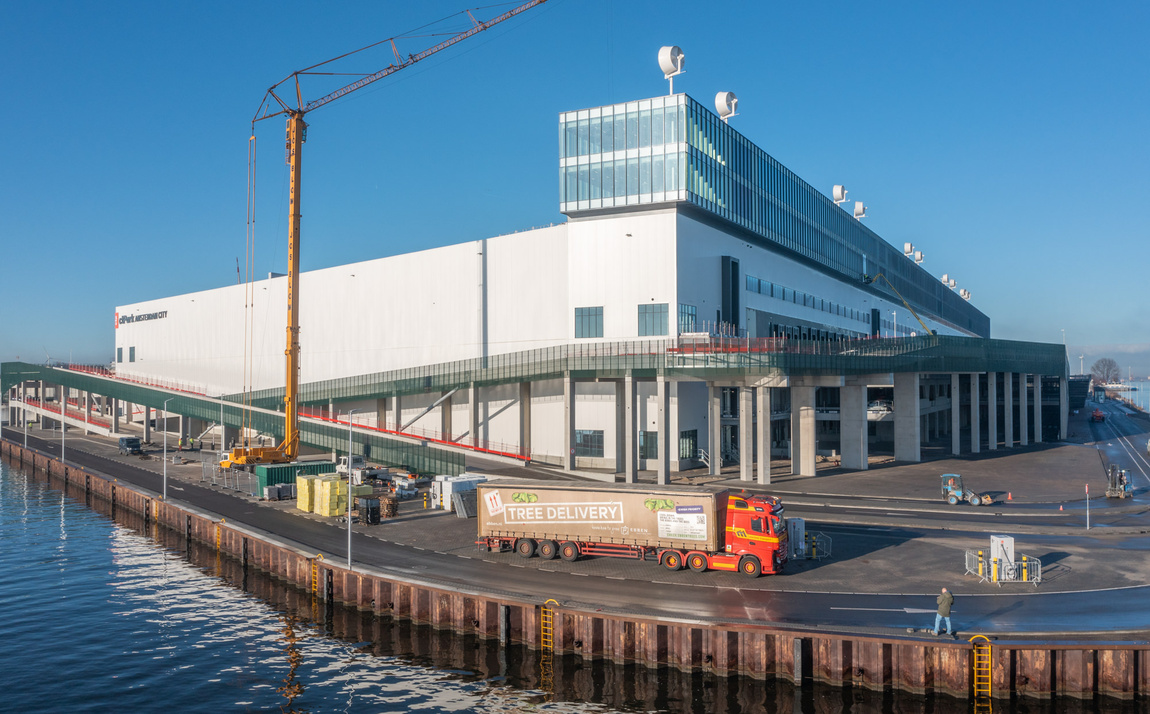
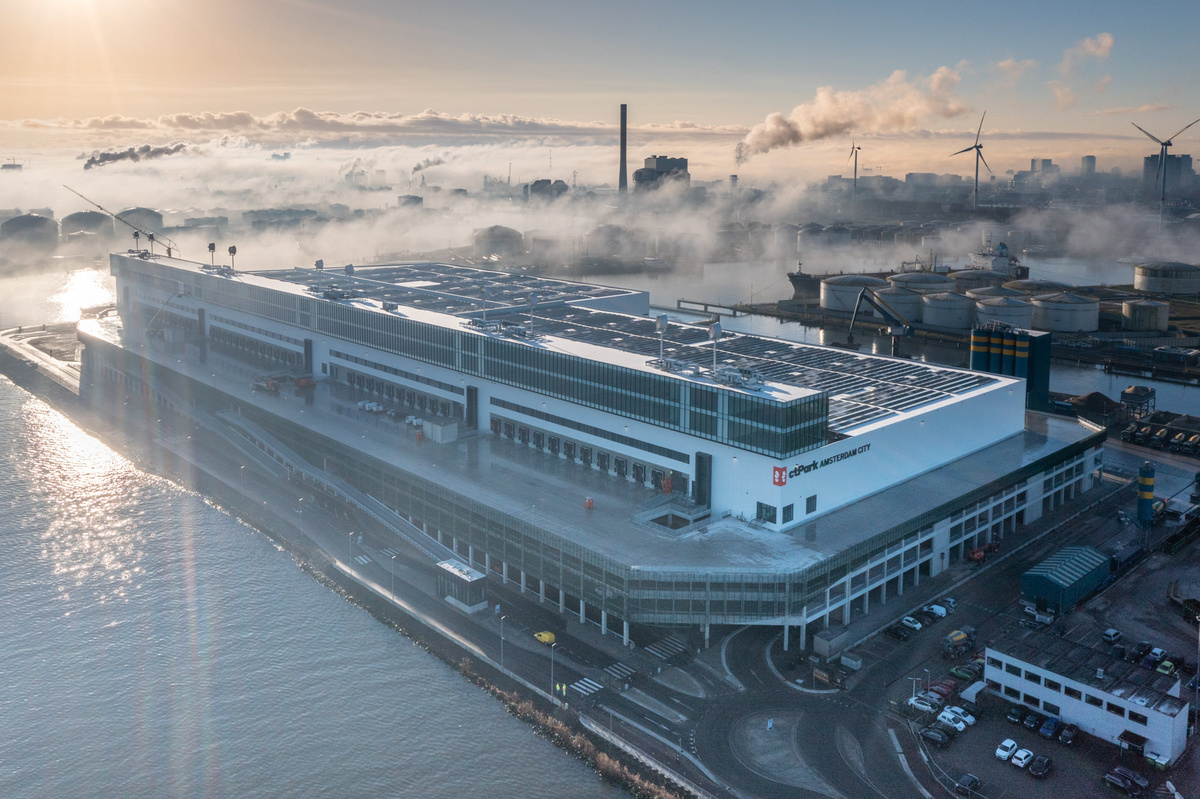
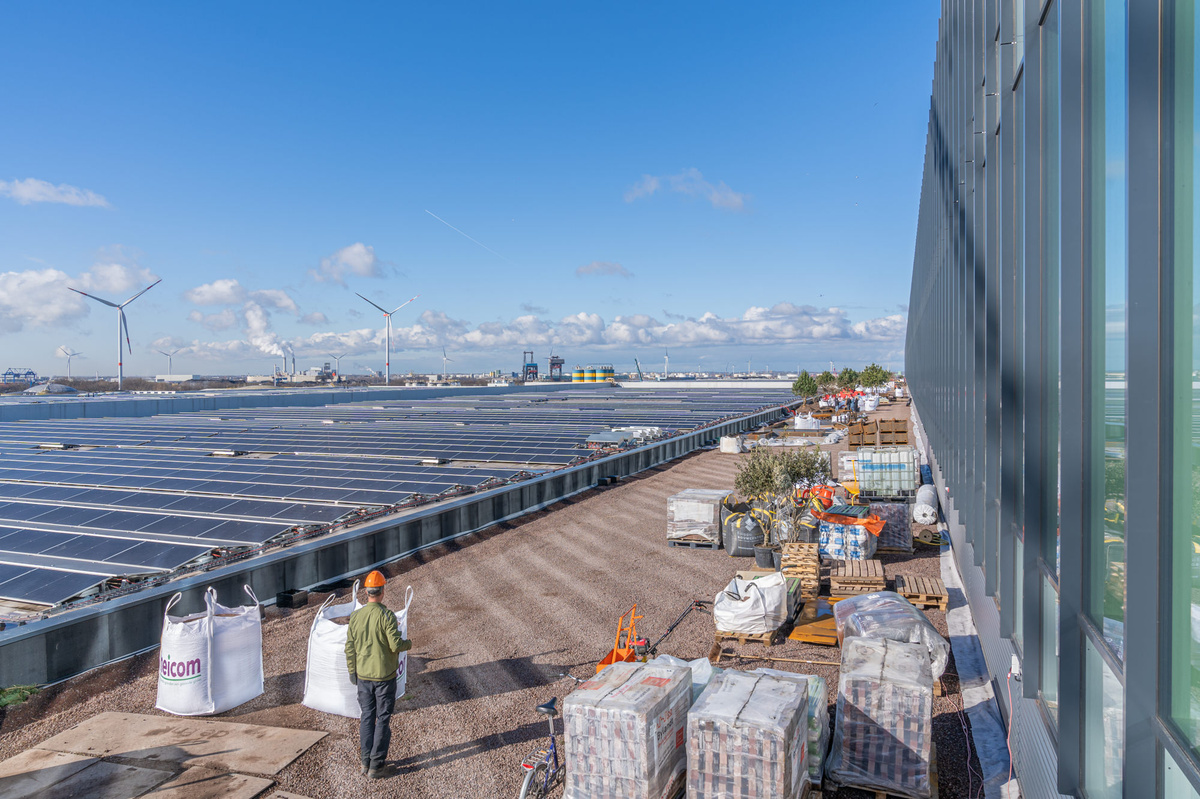
The rooftop garden was developed as part of CTP’s ambition to give its first Dutch location a sustainable and distinctive identity. The building functions as a local distribution hub for urban logistics. Large trucks deliver goods, after which smaller, fully electric vehicles transport them into the city. Thousands of solar panels on the roof generate a significant portion of the site’s energy demand.
The logistics complex itself is a double-deck structure designed for highly intensive use of space. The roof was originally fully occupied by technical installations and solar panels and was not intended to accommodate a rooftop garden. At the same time, the office spaces called for a high-quality outdoor area that would be directly accessible to employees. Alongside its technical function, a desire emerged to create a place where work and wellbeing could coexist. Not only logistics and efficiency, but also comfort, quality of stay and health were to play a meaningful role in the building’s design.
Context and challenges
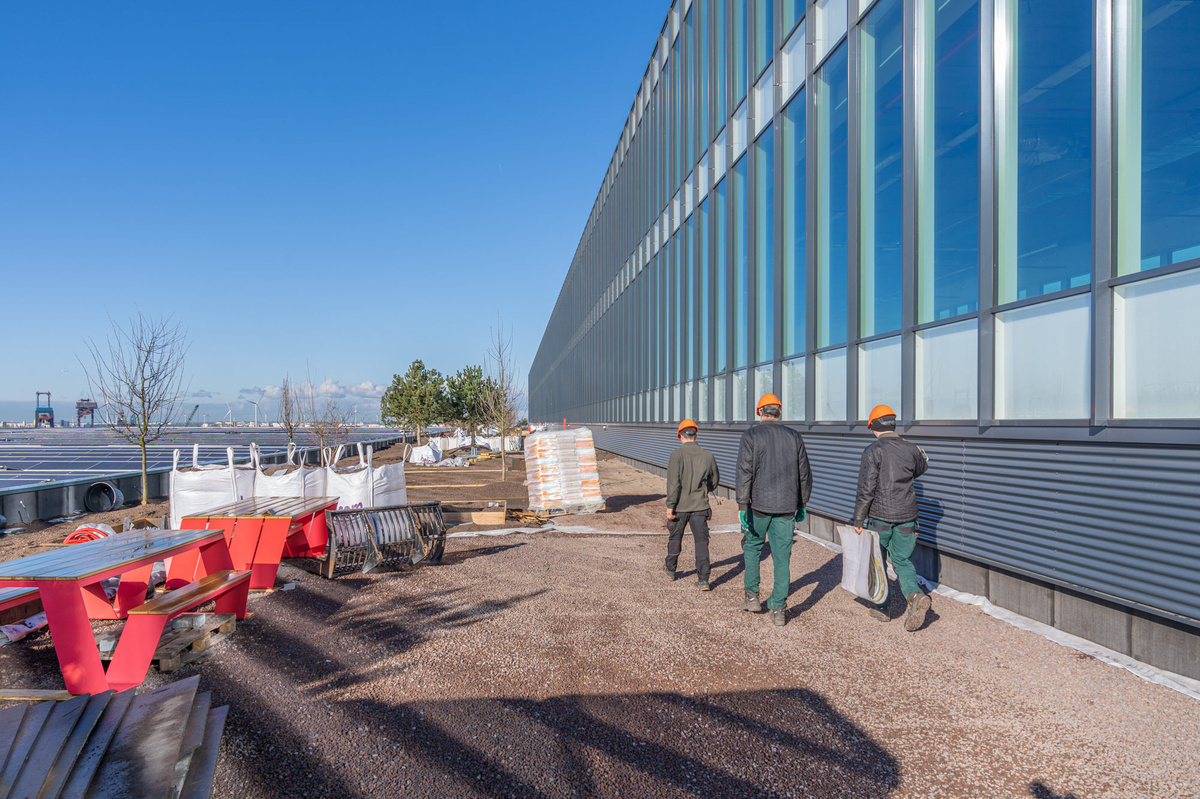
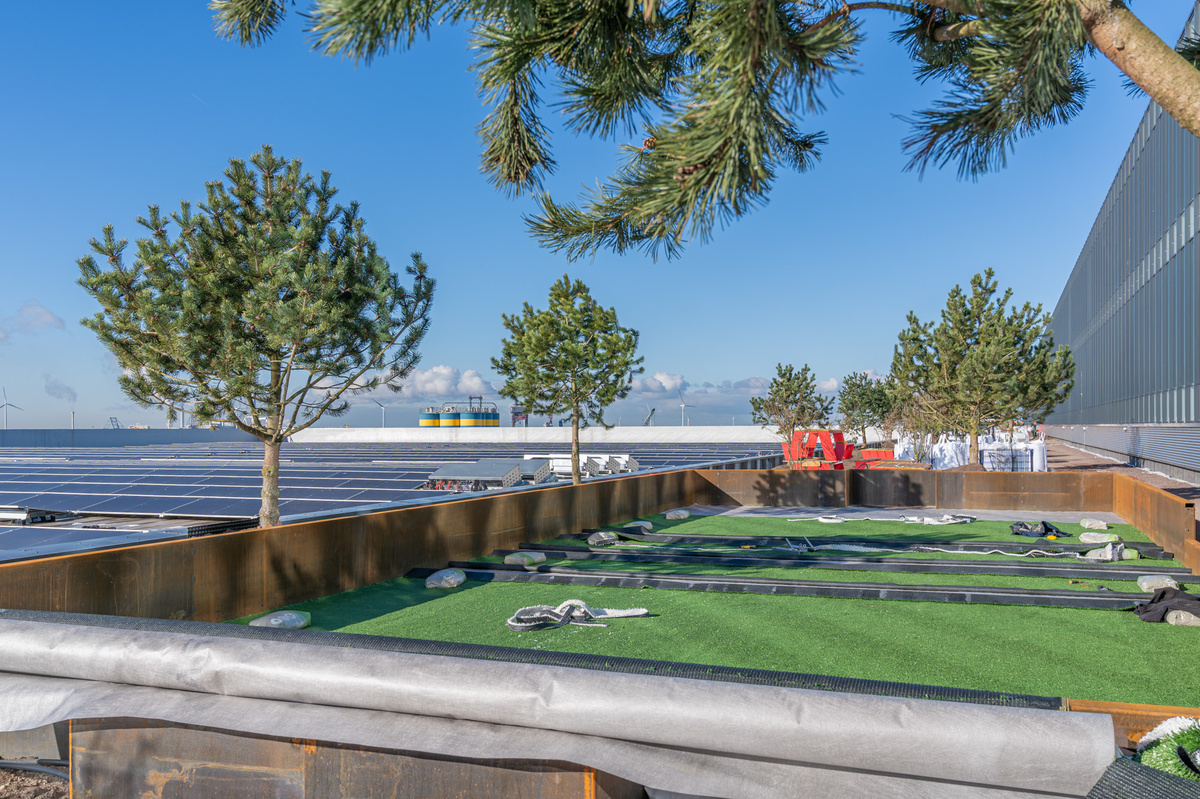
The exposed location in Amsterdam’s open harbour area presented a number of challenges. At a height of 25 metres, the site is subject to strong winds, intense solar exposure and reflection from the glass façade and solar panels that span the full length of the building. The combination of height, wind load, reflectivity, limited substrate depth and heat made both the design and construction particularly complex.
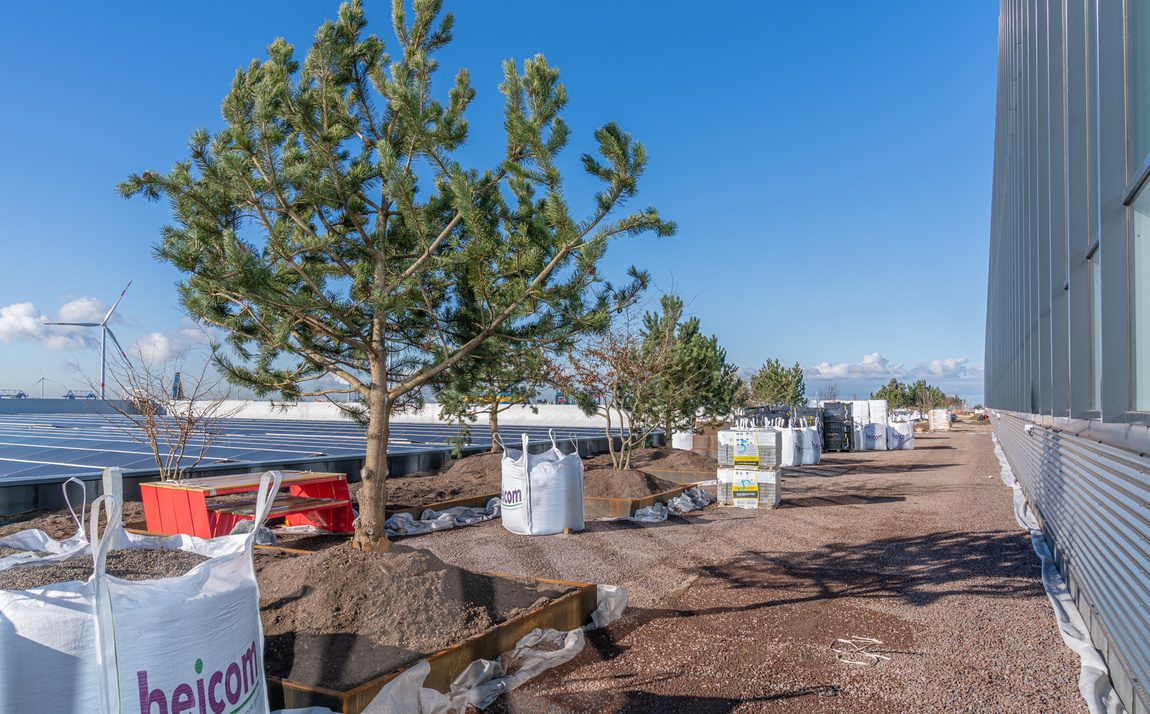
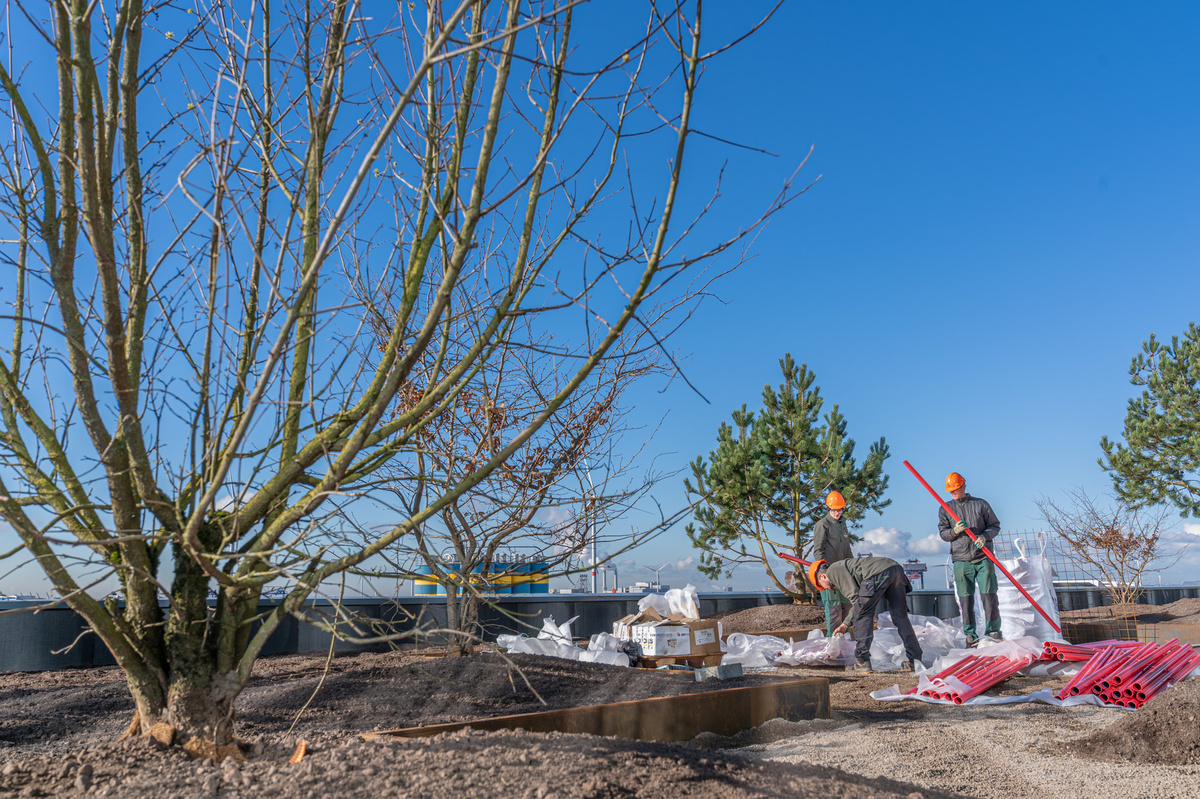
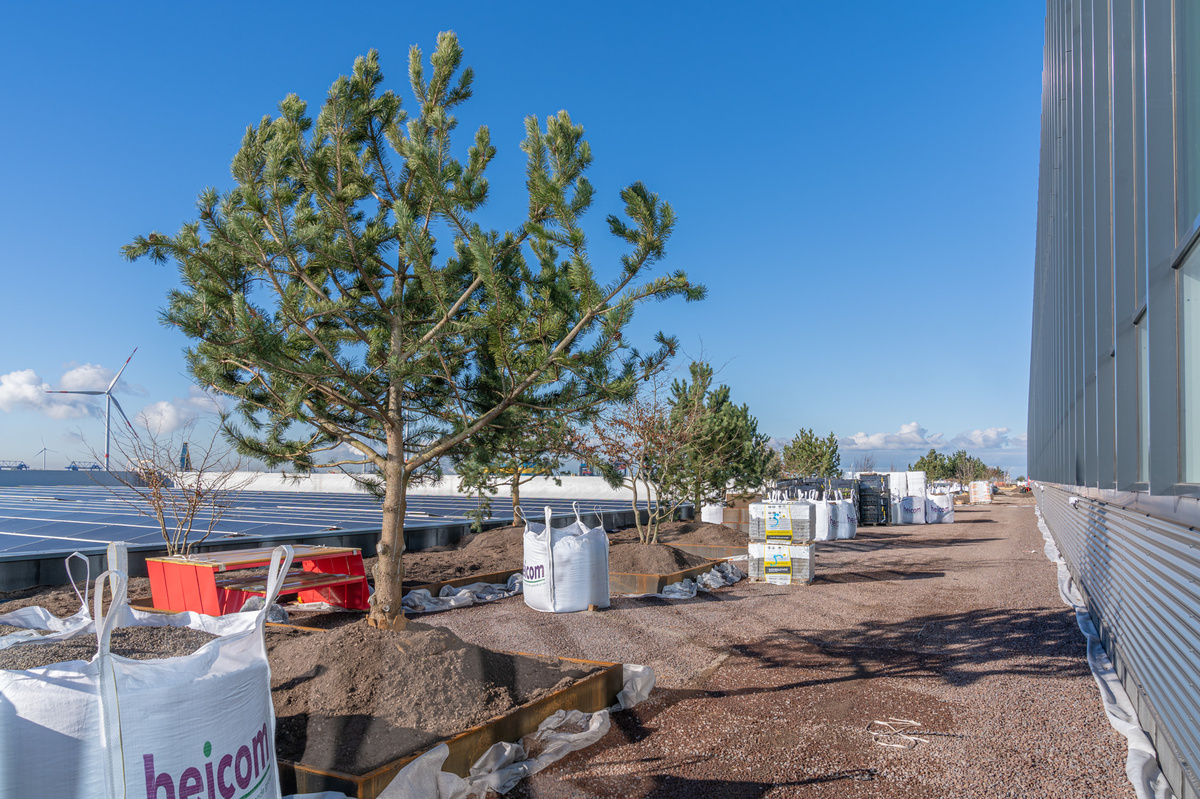
The execution required a highly specialised approach as well: all trees had to be hoisted up and then transported across the full 400-metre length of the roof according to a carefully planned schedule, ensuring that the structure’s weight limits were not exceeded.
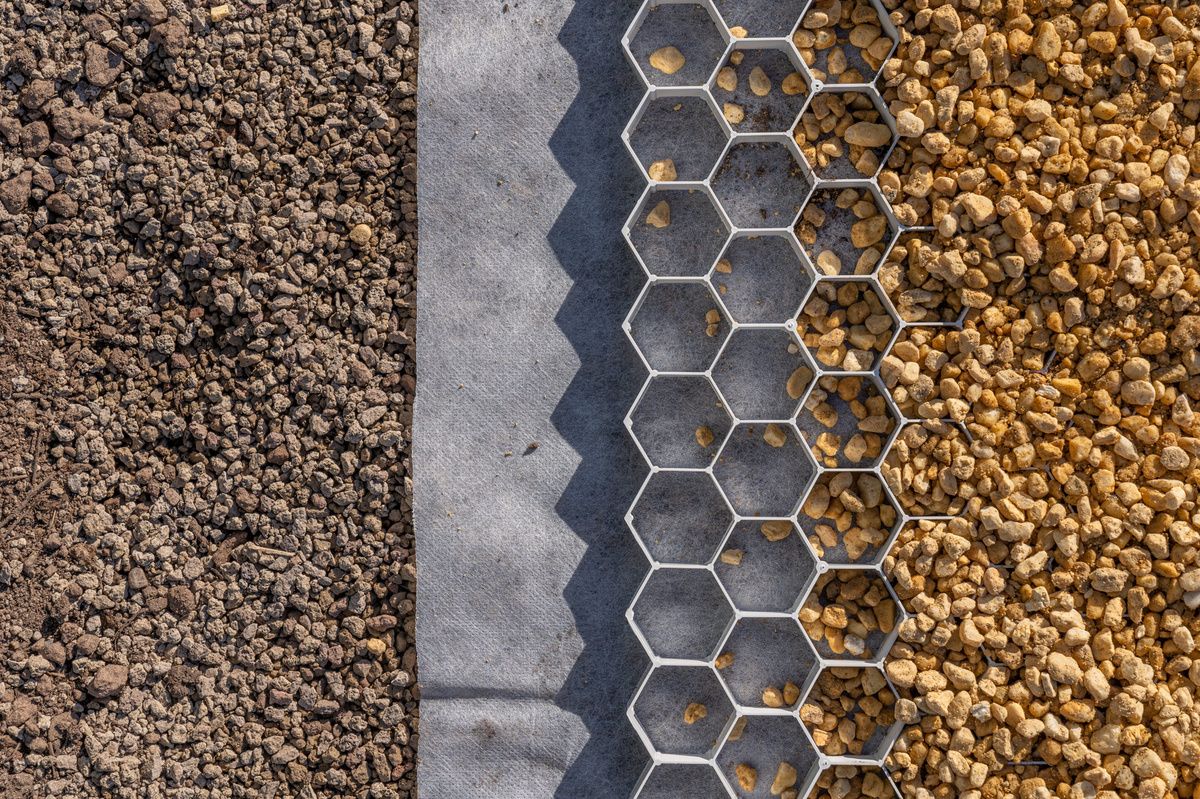
A rooftop garden of this scale demands a well-considered technical solution, given both the weight restrictions and the extreme wind loads. The soil build-up and water management system have been designed to capture and reuse water for irrigation. This reduces reliance on mains water and makes the garden more resilient for the future. The substrate used provides sufficient moisture retention while keeping the overall weight within the structural capacity of the roof. Biodiversity also plays a key role. The client’s ambition was to create a rooftop garden that is attractive to both people and wildlife.
Designed for engagement and experience
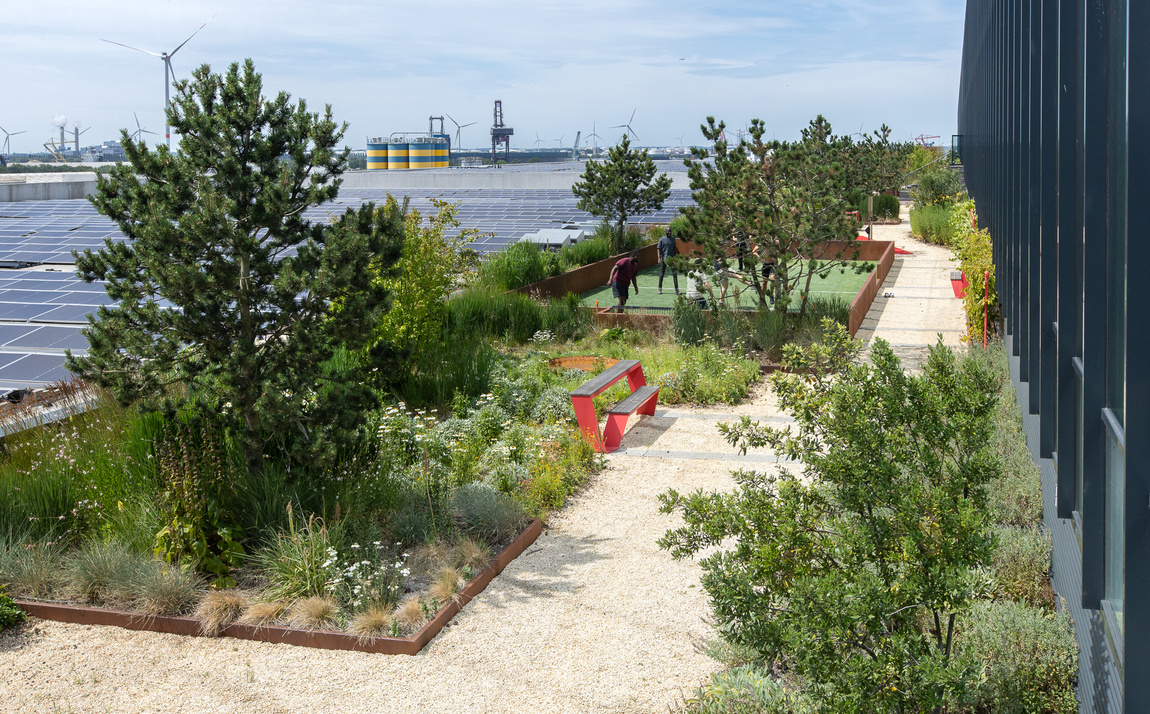
In a setting defined by hard surfaces and constant activity, the rooftop garden offers a striking contrast. It is exclusively accessible to building users, who can quite literally step into a green environment.
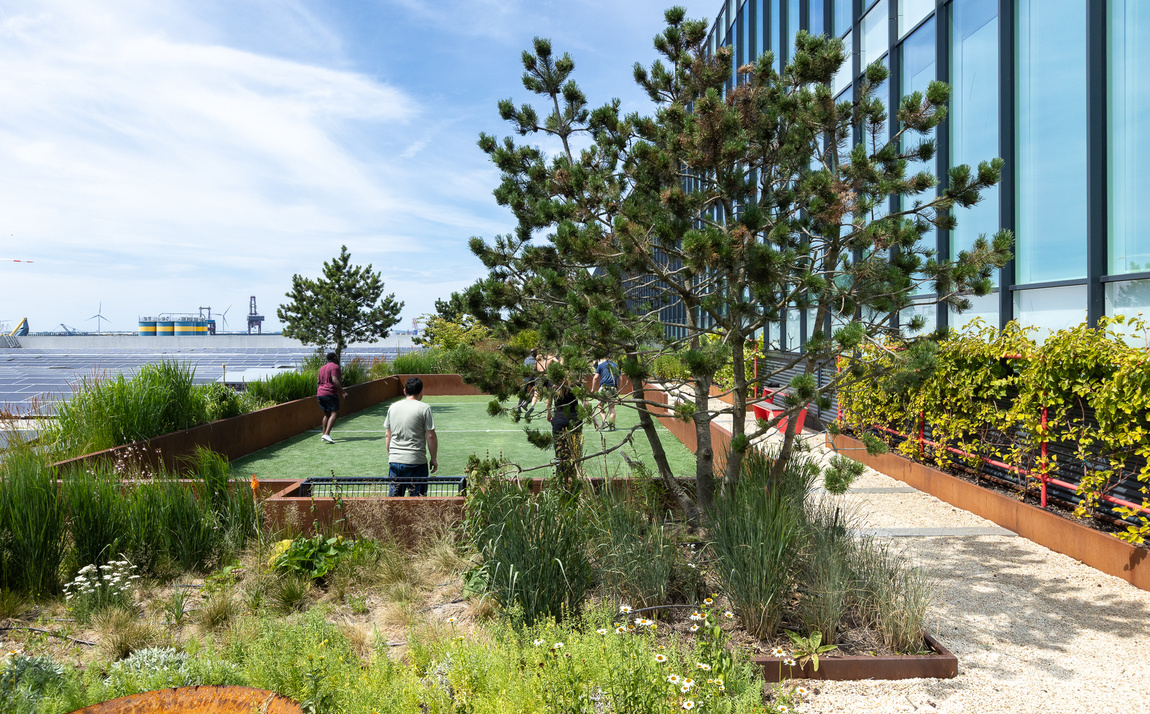
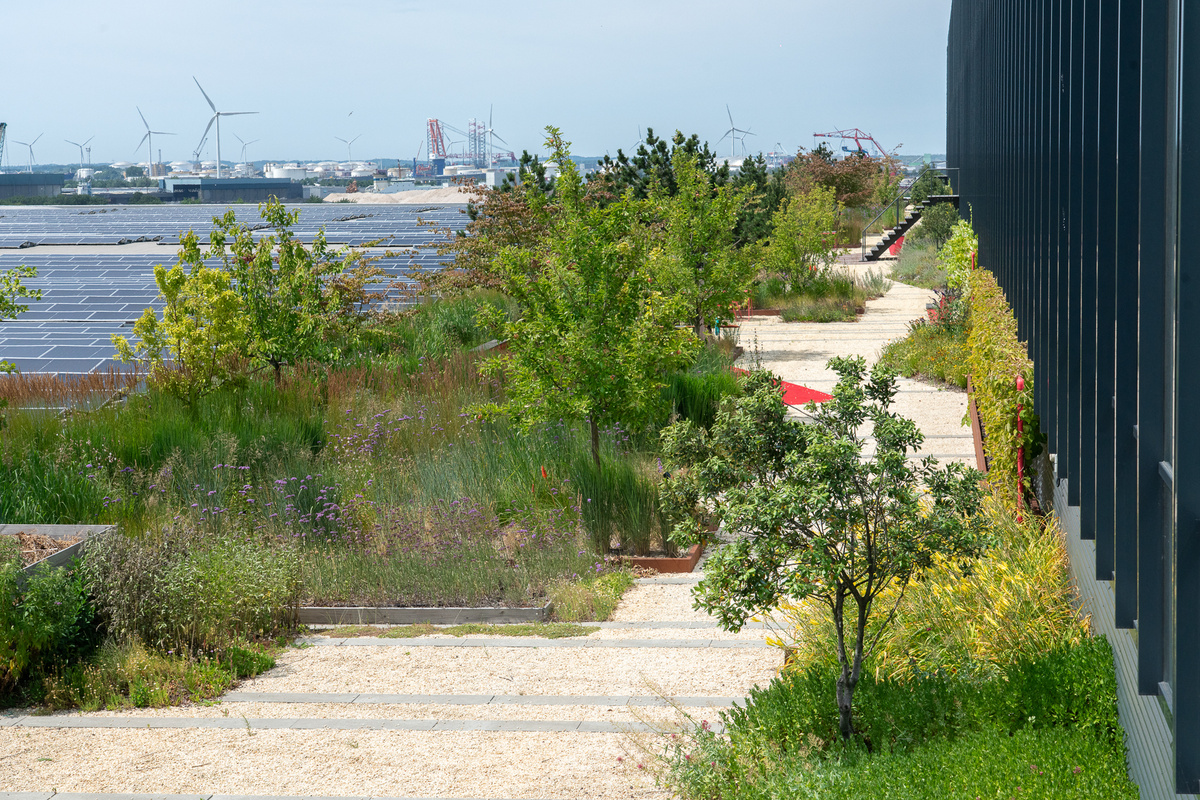
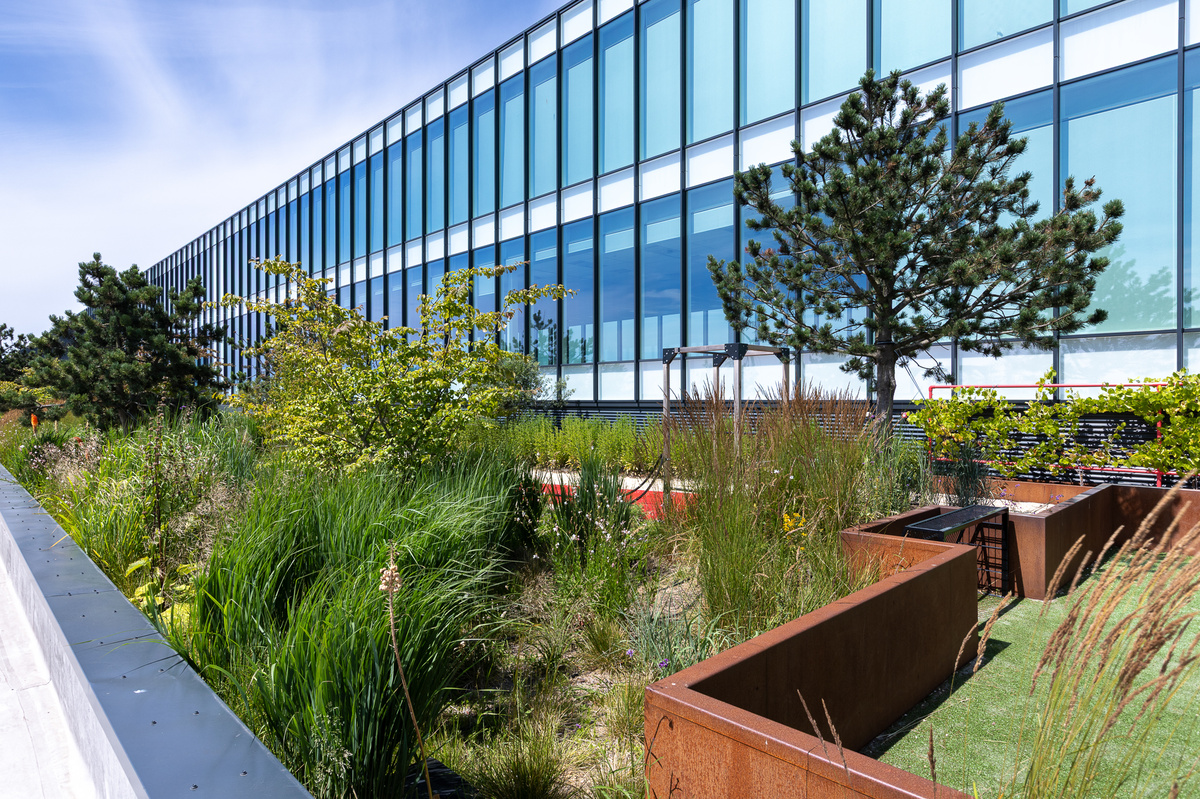
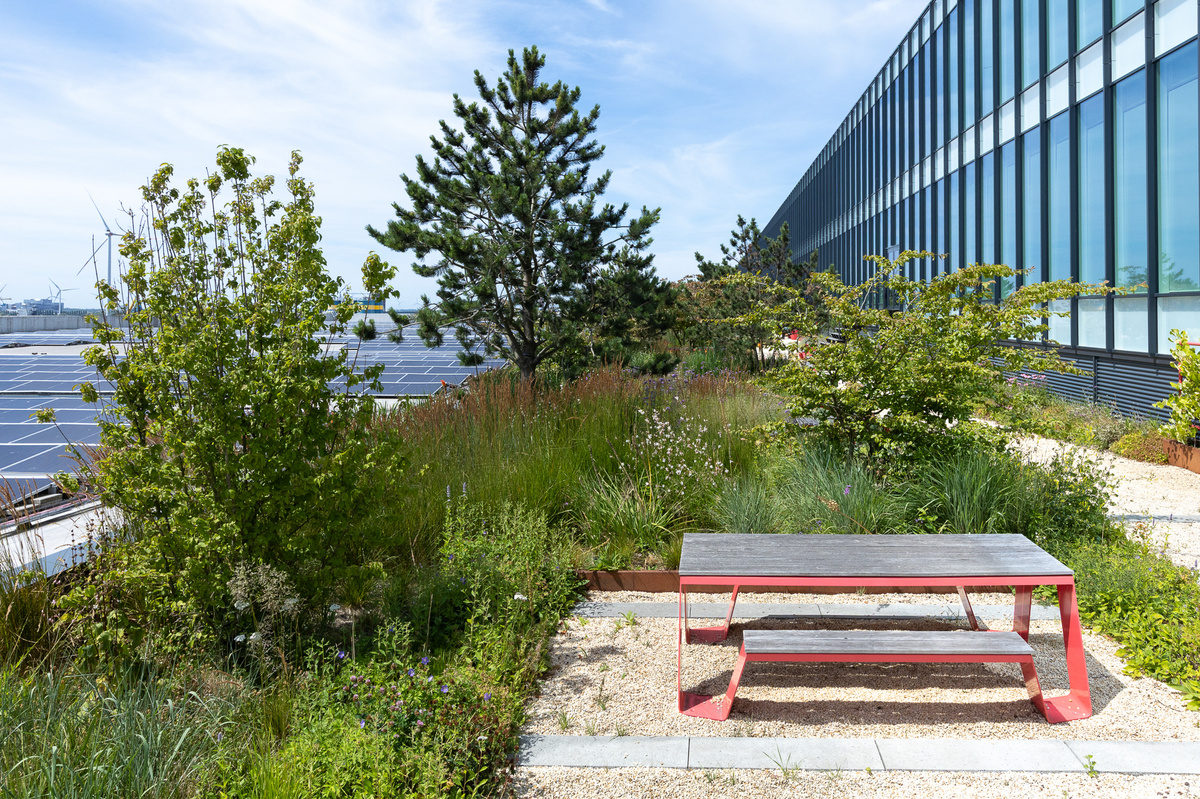
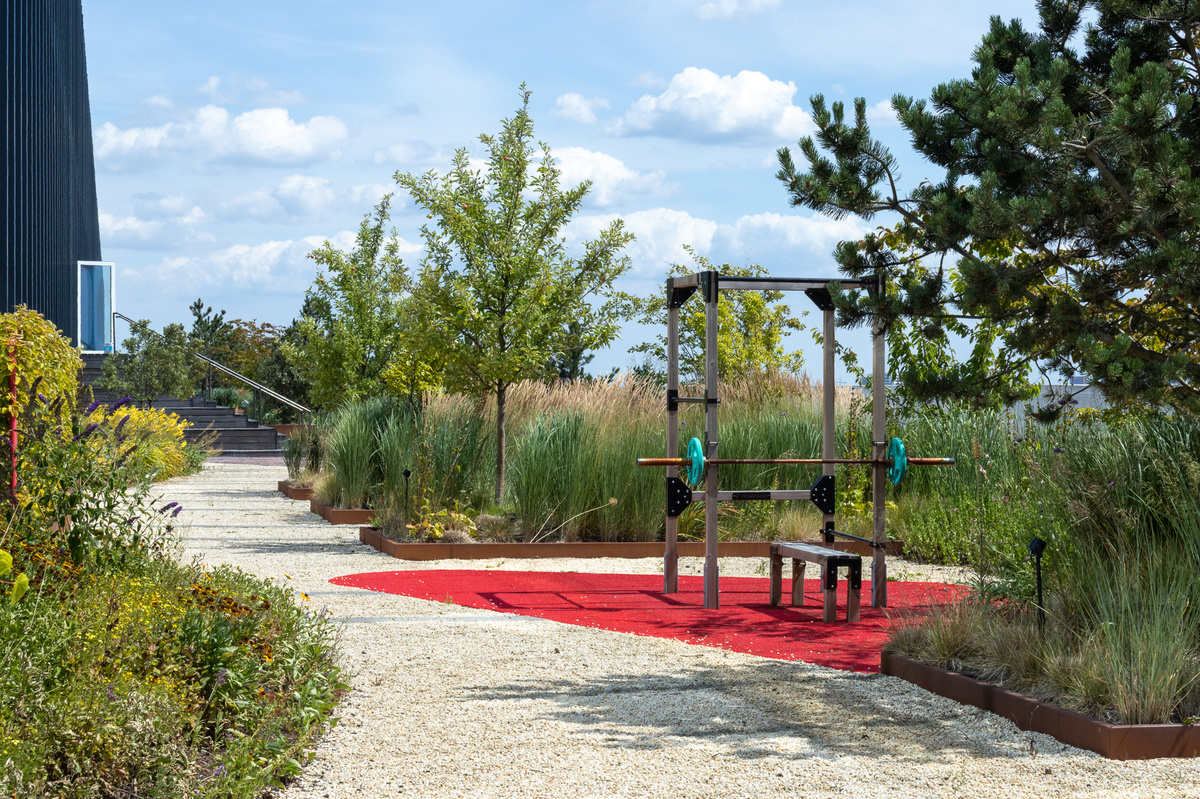
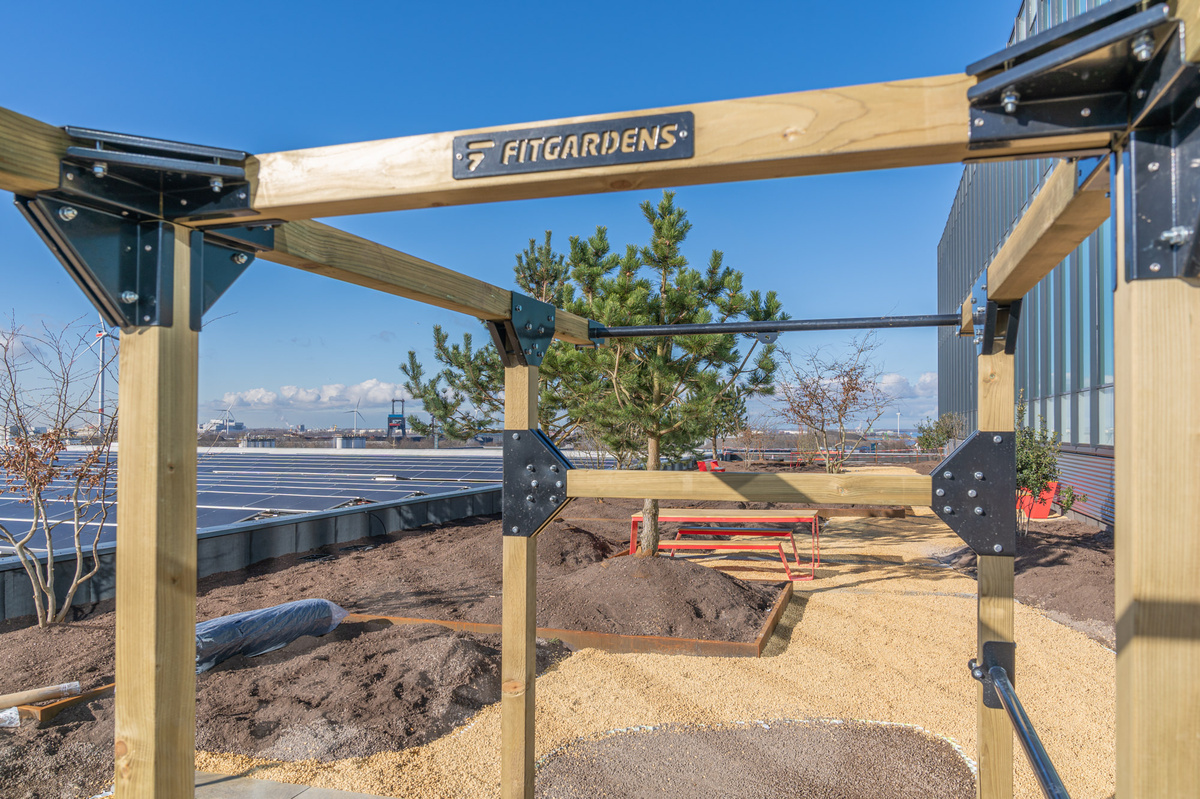
The design is fully focused on versatility and user experience. Employees can take a walk during breaks, enjoy lunch together or hold informal meetings. The space also includes a panna pitch and areas for activities such as bootcamp training. The elongated shape of the roof allows for a varied route with different atmospheres, alternating between open areas with expansive views and more sheltered spots nestled within the planting.
Engagement is a central theme. The garden has been designed as an edible landscape, featuring fruit trees and shrubs such as apples, kiwis and grapes, alongside herbs like mint and basil. By seeing, smelling and tasting, employees actively experience the garden and engage closely with the changing seasons.
Planting and tree selection
The planting scheme has been carefully tailored to the specific conditions of a rooftop garden at height. Robust, climate-resilient species were selected, with a strong emphasis on seasonal variation. Multi-stemmed Parrotia persica (Persian ironwood) provides structure and layering, while the use of multi-stemmed trees helps to distribute wind forces more effectively. Pinus mugo subsp. uncinata was chosen for its compact growth and high wind resistance, creating a full and dynamic appearance along the length of the garden with its low branching habit. In areas with the highest levels of solar reflection, Quercus ilex (holm oak) has been introduced, a Mediterranean species well suited to heat, drought and wind. As an evergreen, it also ensures that the garden remains visually appealing throughout the winter months.
Planting that includes fruits and seeds, along with shallow water dishes, makes the garden attractive to birds and insects. In this way, the project contributes to ecological development in a location where greenery would not normally be expected. Fruit trees and herbs further enhance not only biodiversity, but also the garden’s usability and sensory richness.
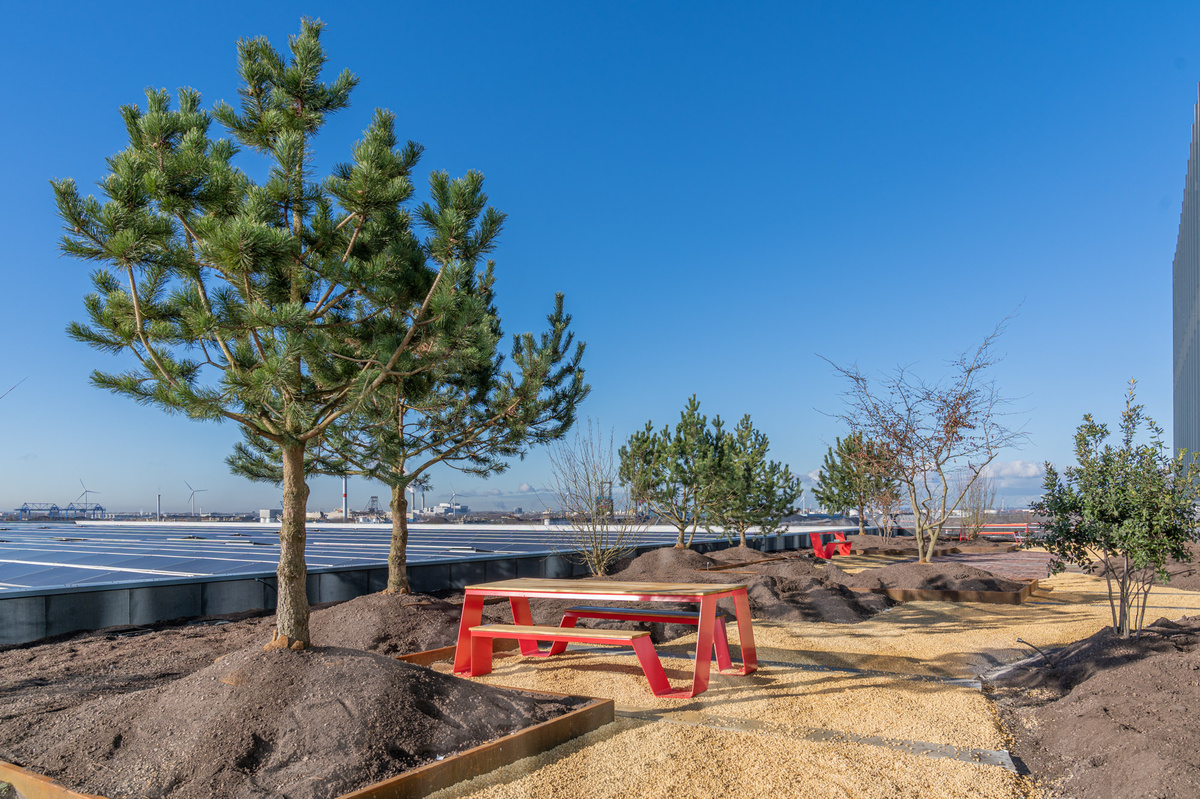
As the project progressed, the ambition grew to incorporate more and larger trees. The 94 trees on the roof range in height from approximately 2.5 to 5 metres, which is remarkable given the complexity of the site. As a result, the garden already has a strong green character and a distinct identity from the moment of completion.
Collaboration and delivery
The rooftop garden is the result of close collaboration between the client, designers, structural engineers, contractor and nursery. The design was developed by Baljon Landscape Architects, the project was delivered by De Enk Groen & Golf, and Boomkwekerij Ebben provided guidance on species selection, sizing and tree application. It was essential not only that the planting could withstand the specific rooftop conditions such as wind, sun exposure and limited substrate depth, but also that it formed a coherent and visually balanced whole. By deliberately selecting species with a variety of forms, structures and seasonal characteristics, a harmonious composition has been achieved that remains attractive throughout the year.
Working as an integrated team and combining expertise allowed design and engineering to be continuously aligned, ensuring that challenges were addressed at an early stage. The commitment and craftsmanship of all parties involved are widely regarded as key to the project’s success.
Outcome and long-term value
The addition of the rooftop garden has enriched an intensively used logistics building with a green space that enhances the working environment and provides shade during breaks. The trees play a key role in this: they give the garden volume, offer shelter and create a distinctive and recognisable landscape on the roof. At the same time, the garden strengthens the building’s visual identity and introduces biodiversity into an environment where greenery is not a given.
The project demonstrates that even under complex conditions, a fully realised landscape can emerge. Through shared ambition and close collaboration, a 400-metre rooftop has been transformed into a green route where nature, work and wellbeing come together.
- LocationAmsterdam
- Area4800m2 (approximately 12 by 400 metres)
- DesignBaljon Landscape Architects
- Planting
Trees (94 in total):
Parrotia persica
Pinus mugo uncinata
Quercus ilex
Cornus mas
Fruit trees:
Prunus avium ‘Kordia’
Cydonia oblonga ‘Leskovacka’
Diospyros kaki
Pyrus communis ‘Conference’
Malus domestica ‘Rode boskoop’
Perennials and ornamental grasses:
Aquilegia chrysantha
Hemerocallis citrina
Achillea millefolium 'Hoffnung'
Coreopsis verticilata 'Moonbeam'
Heuchera 'Carmen'
Aster divaricatus 'Beth'
Rudbeckia subt. 'Henry Eilers'
Coreopsis verticilata 'Moonbeam'
Heuchera 'Carmen'
Aster divaricatus 'Beth'
Rudbeckia subt. 'Henry Eilers'
Rudbeckia fulgida 'Early Bird Gold'
Deschampsia cespitosa 'Goldtau'
Panicum virgatum 'Northwind'
Calamagrostis acutiflora 'Karl Foerster'
Deschampsia cespitosa 'Bronzeschleier'
Panicum virgatum 'Cloud Nine'
Deschampsia cespitosa 'Goldtau'
Panicum virgatum 'Northwind'
Sorghastrum nutans
Deschampsia cespitosa 'Bronzeschleier'
Panicum virgatum 'Cloud Nine'
Deschampsia cespitosa 'Goldtau'
Panicum virgatum 'Northwind' - GroundworksDe Enk Groen & Golf
CTP Cityhub, Amsterdam, The Netherlands







STEP INTO OUR GREEN WORLD!
Visit our 550-hectare nurseries and see our 1,400-m² roof garden.Make an appointment
STAY UP TO DATE
Sign up for our newsletter© 2026 • Boomkwekerij Ebben B.V.
•
Disclaimer •
Privacy and cookie statement •
Terms and conditions
• Purchase conditions