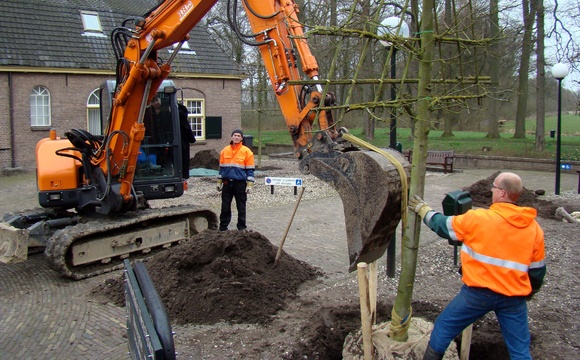
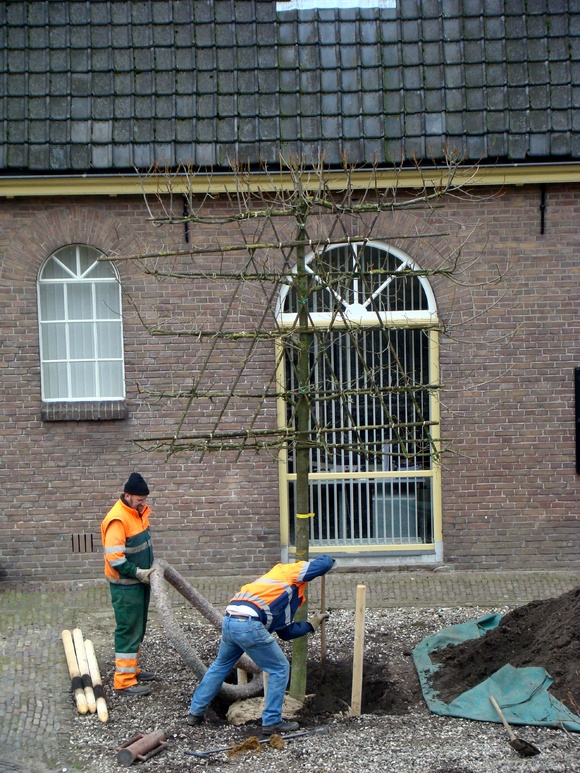
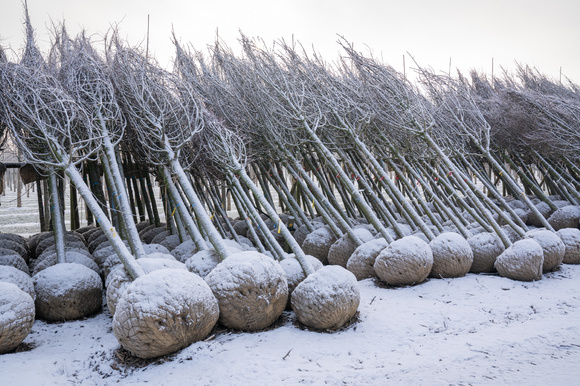
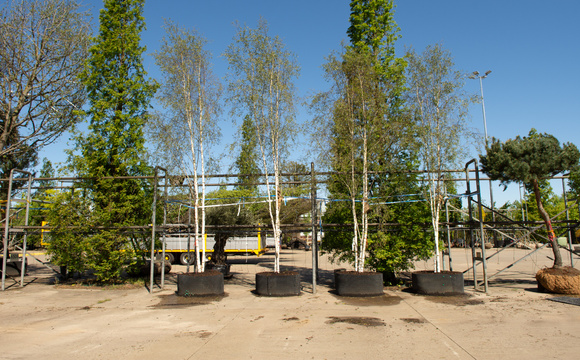
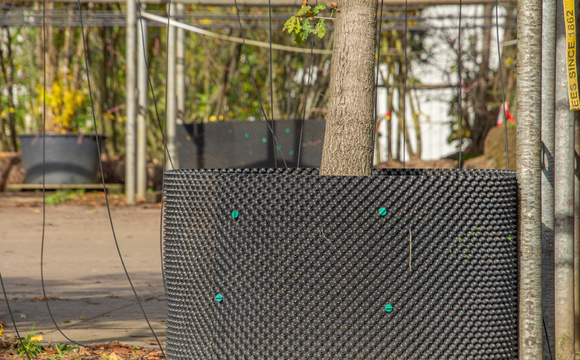
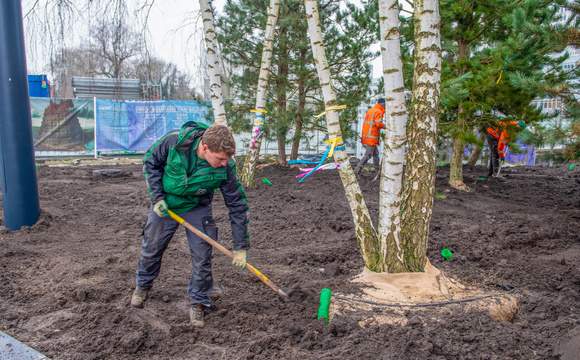
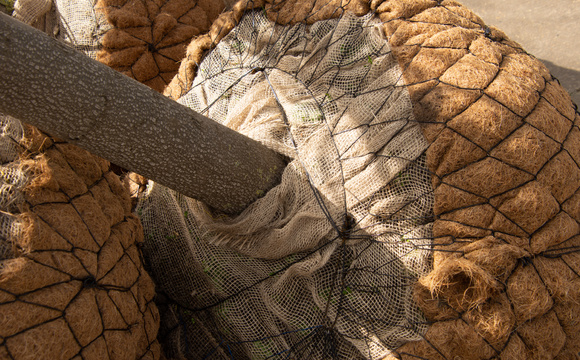
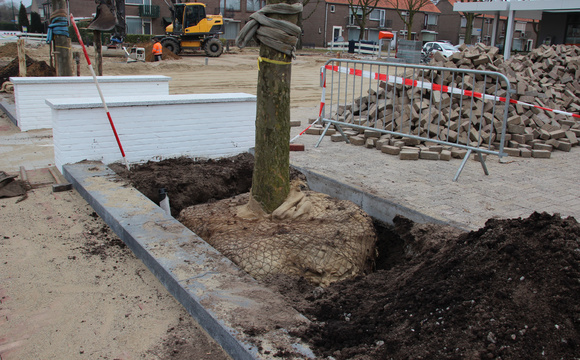
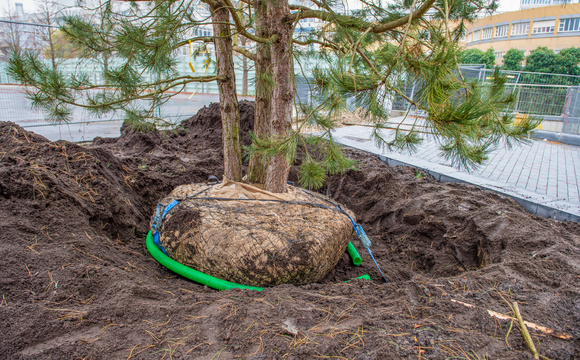
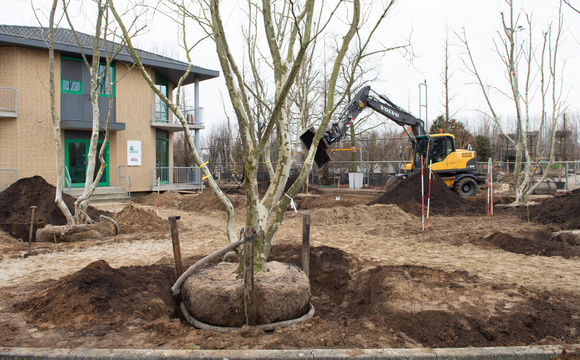
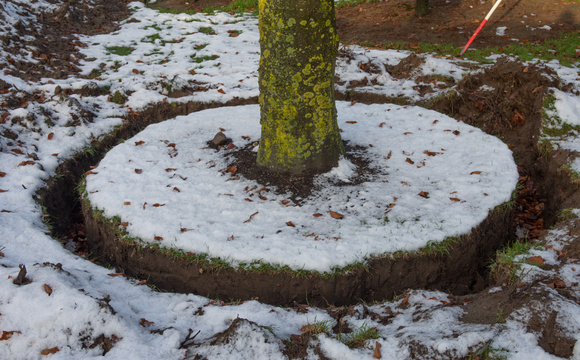
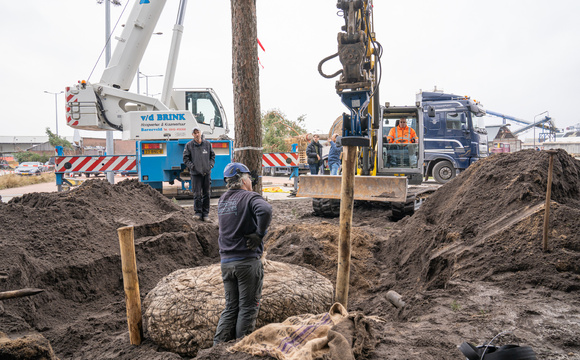
Root-balled trees are what we trade most, and one of their major advantages is that the roots do not dry out quickly, which means the shock of transplanting is less severe. Especially in the case of large trees that have been transplanted several times, a good root ball is crucial for successful establishment. If the tree has a girth size of 16–18, it will almost always have a root ball. Even if the tree remains above ground for some time before transport and planting, and the planting is not carried out properly, a root-balled tree can still survive reasonably well. It is, however, important that the tree has been transplanted several times, especially in the case of large trees. This repeated transplanting during the growing process is necessary to create a root ball containing many fine feeder roots, keeping the tree adaptable and transplantable. As long as we continue transplanting a tree at the nursery, it remains transplantable and therefore saleable. The aftercare of root-balled trees after planting is also less intensive than that of bare-root stock. Whereas our advice is to plant bare-root plants preferably in autumn (late October / mid-December), a root-balled tree can be planted over a much longer period.
A few important reasons to choose a tree with a root ball:
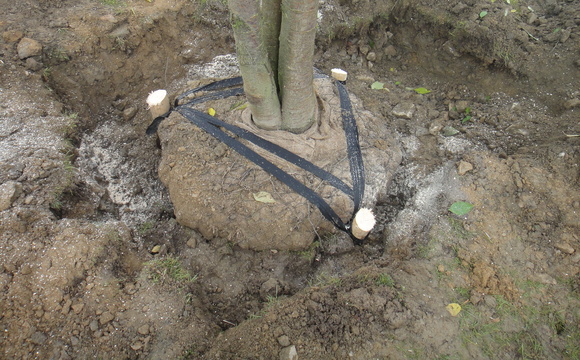
Anchoring: A tree with a root ball stands more firmly in the ground immediately after planting, as the roots remain connected to the soil within the root ball. A bare-root tree always stands less firmly; when the new roots start to emerge during establishment, wind can cause slight root movement, which may break the young root tips. The larger the tree, the greater the effect of wind. With a heavy root ball at the base, the tree can also be anchored underground effectively, simply by tightening straps over the root ball.
For some trees, it is also important that certain soil fungi are carried along, the so-called mycorrhiza. This is a symbiosis between soil fungi and the root of the plant and occurs directly around the roots of the trees. These are essentially fungal threads that enable the root system to absorb nutrients as efficiently as possible. The symbiosis lies in the fact that, in return, the plant supplies sugars and other carbohydrates back to the fungus. The tree produces these substances through photosynthesis in the leaves. For a number of tree species, the presence of mycorrhiza is of decisive importance for successful establishment. An example of this is common beech (Fagus sylvatica) and Acer palmatum, which also depend on certain trace elements. The fungal threads also increase the root surface area, which is essential for good moisture uptake.
A final advantage is that root-balled trees also dry out less quickly during transport and storage, because moisture is retained within the root ball.